You’re standing in front of a kiln, a project in your hands, and a question nagging at the back of your mind: “Will this crack?” It’s a common concern for anyone working with clay, whether you’re a seasoned potter or just starting your artistic journey. The answer often lies in understanding the inherent properties of the clay itself, particularly its shrinkage during the drying process. This isn’t just about avoiding a shattered piece; it’s about predicting outcomes, controlling distortion, and ultimately, crafting durable, beautiful works. As you delve into the world of ceramics, you quickly learn that not all clays are created equal, especially when it comes to how much they contract as they lose moisture. This exploration will guide you through the various types of clay and their shrinking tendencies, equipping you with the knowledge to make informed choices for your next creation.
Understanding the Mechanics of Clay Shrinkage
The phenomenon of clay shrinkage is fundamentally linked to the removal of water from its structure. Imagine a microscopic world where tiny clay platelets, like miniature playing cards, are surrounded by water molecules. This water acts as a lubricant, allowing the platelets to slide past each other, giving clay its characteristic plasticity. As your creation begins to dry, this interstitial water – the water between the particles – starts to evaporate. When this happens, the clay particles are pulled closer together, much like socks shrinking in a dryer. This pulling action results in a reduction in the overall volume of your piece, which you experience as shrinkage. The amount of shrinkage isn’t uniform across all clay types; it’s a complex interplay of particle size, shape, mineral composition, and the presence of non-plastic inclusions.
The Role of Particle Size and Plasticity
Think about a pile of sand versus a pile of flour. The sand particles are relatively large and irregular, creating many air pockets between them. The flour particles, on the other hand, are much finer and can pack together more densely. Clay particles behave similarly. Kaolin, for instance, generally possesses larger particles than ball clay. These larger particles create a more open structure with less surface area for water to cling to. As a result, when the water evaporates, there’s less overall “pull” between the particles, leading to less shrinkage.
Conversely, ball clay is renowned for its extremely fine particles. These minute platelets, often irregular in shape, are able to pack together very tightly, and their extensive surface area allows them to hold a significant amount of water. This high water content contributes directly to its exceptional plasticity – it’s very easy to mold and shape. However, this plasticity comes at a cost: as that large volume of water leaves the clay during drying, the fine particles draw much closer together, resulting in a considerable reduction in volume. This is why ball clay is often described as high-shrinkage. You’ll find that clays with finer particle sizes tend to be more plastic, but also shrink more, creating a delicate balance that potters constantly navigate.
Water Content and Mineral Composition
The amount of water a clay body holds is a primary driver of shrinkage. Clays that naturally absorb and retain more water will generally shrink more upon drying. This isn’t just about particle size; it’s also about the mineralogical makeup of the clay. Different clay minerals, such as kaolinite, illite, or montmorillonite, have varying abilities to absorb water due to their crystal structures and surface charges. Kaolinite, the primary mineral in kaolin, tends to absorb less water than some other clay minerals. This inherent property, combined with its larger particle size, contributes to its lower shrinkage rate.
Beyond the initial water content, some clays also contain chemically bound water within their molecular structure. This water isn’t simply sitting between particles; it’s an integral part of the clay mineral itself. While drying removes the free water, firing is required to drive off this chemically bound water. The removal of this chemically bound water during firing also contributes to shrinkage, though it’s distinct from the shrinkage that occurs during air drying. For now, focus on the immediate impact of free water evaporation as you shape and dry your pieces.
Comparing Specific Clay Types for Shrinkage
As you begin to choose your materials, understanding the specific shrinkage characteristics of different clay types becomes crucial. This knowledge allows you to anticipate potential problems, adjust your designs, and ultimately achieve the desired outcome for your ceramic pieces. From the refined elegance of porcelain to the robust strength of stoneware, each clay body has its own unique personality when it comes to drying.
Kaolin and its Derivatives
When you’re looking for a clay that offers stability and minimal distortion during drying, kaolin should be high on your list. Its inherent properties make it a favored choice for applications where precise dimensions are critical. The key reason for its lower shrinkage is tied to its particle structure. Kaolin possesses larger, more organized particles compared to other highly plastic clays like ball clay. These larger particles create a less dense packing arrangement when wet, meaning there’s less interstitial space for water to occupy. Consequently, as the water evaporates, the particles don’t have as far to travel to come into contact, resulting in a smaller reduction in overall volume. You’ll find that kaolin typically shrinks less than ball clay, making it an excellent component in clay bodies where shrinkage control is desired.
The Advantage of Calcined Kaolin
If you’re seeking to minimize shrinkage even further, calcined kaolin is an exceptional material. Think of calcination as a pre-firing process. Raw kaolin is heated to high temperatures, effectively driving off not only the free water but also the chemically bound water that’s part of its molecular structure. This process transforms the kaolin into a non-plastic, stable material. When you then incorporate calcined kaolin into a clay body, you’re essentially adding a filler that has already undergone significant shrinkage. Because it has no more water to lose (both free and chemically bound), it acts as an inert material that resists further contraction. This dramatically reduces the overall shrinkage of the clay body it’s mixed into, making it invaluable for specific applications like refractories, glazes, and even some very low-shrinkage casting slips. You’ll discover that calcined kaolin shrinks even less than raw kaolin, offering superior dimensional stability.
Ball Clay: The High Shrinkage Contender
Now, shift your focus to ball clay, and you’ll encounter a very different story regarding shrinkage. While indispensable for its incredible plasticity, ball clay is also known for its significant shrinkage. Its strength and workability come from its extremely fine particle size and high proportion of plate-like particles. These tiny particles, often irregular in shape, pack together with a vast amount of surface area, allowing them to absorb and retain a substantial volume of water. This high water content is what gives ball clay its exceptional plasticity – you can pull it, stretch it, and mold it with relative ease.
However, as you dry a piece made primarily with ball clay, all that water needs to go somewhere. As it evaporates, the immense surface tension created by the water film pulls these fine particles very tightly together. This close packing leads to a considerable reduction in volume. Therefore, you’ll generally find that ball clay shrinks more than kaolin. This characteristic is so pronounced that ball clay is often explicitly described as a high-shrinkage material. While it’s a critical component in many ceramic bodies, providing strength and workability, its high shrinkage necessitates careful consideration in your design and drying processes to prevent warping or cracking.
Porcelain: Elegance with a Shrinkage Challenge
Porcelain is undeniably beautiful, prized for its translucent quality, pristine whiteness, and elegant finish. However, achieving these characteristics often comes with a trade-off in terms of shrinkage. When you work with porcelain, you’re handling a clay body composed of very fine particles, typically a blend of kaolin, feldspar, and silica. It’s the extremely fine particle size, particularly of the kaolin used in porcelain formulations, that contributes to its higher shrinkage rate. Similar to ball clay, though often with a more refined composition, these minute particles are able to pack together very densely.
As your porcelain piece dries, the water evaporates, and the fine particles draw closer together, resulting in a noticeable reduction in volume. This high shrinkage, combined with porcelain’s inherent delicacy when wet, makes it a challenging material to work with, especially for larger or more intricate forms. You’ll often find that porcelain typically shrinks more than stoneware and many other clay bodies. This means you need to be particularly mindful of drying schedules, ensuring a slow and even process to minimize stress and prevent warping or cracking. Careful design and an understanding of its shrinkage are paramount to successfully working with porcelain.
The Role of Non-Plastic Inclusions in Reducing Shrinkage
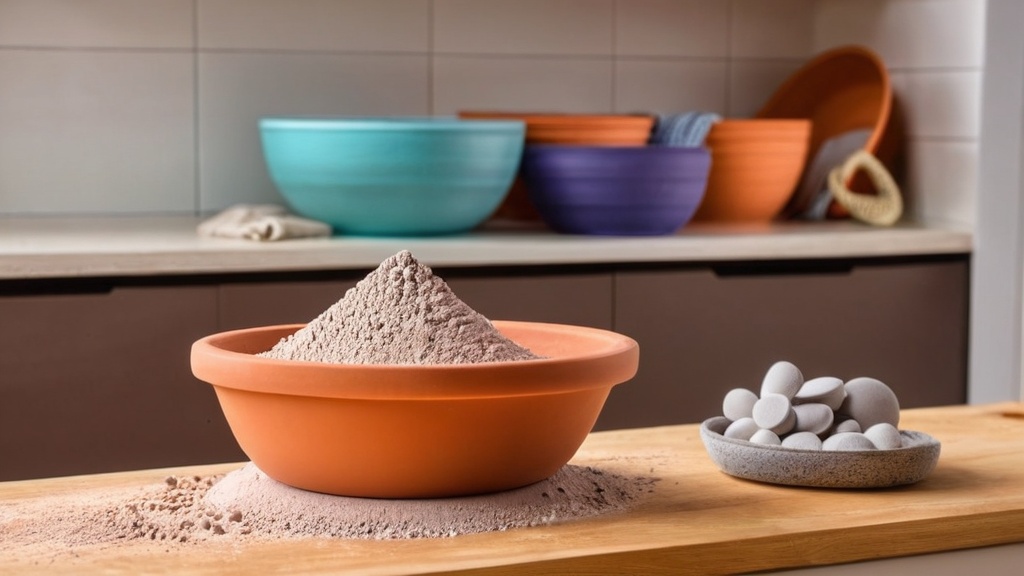
Imagine adding pebbles to a bucket of wet sand. The pebbles take up space and don’t change their size when the sand dries, effectively limiting how much the sand itself can compact. This is the principle behind using non-plastic inclusions in clay bodies to reduce shrinkage. These materials, often referred to as “grogs” or “fillers,” are crucial for tempering the natural tendency of plastic clays to contract significantly during drying and firing. By incorporating particles that don’t shrink themselves, you effectively create a rigid skeleton within the clay matrix, limiting the overall volumetric reduction.
Grogged Clays and Molochite
When you encounter a clay body labeled “grogged clay,” you’re looking at a formulation specifically designed for improved stability. Grog is essentially pre-fired, crushed ceramic material, often made from stoneware, fireclay, or even porcelain. Because grog has already been through the firing process, it has undergone its maximum shrinkage and is dimensionally stable. When you add this pre-shrunk material to your plastic clay, it acts as an inert filler. These pre-fired particles create spaces within the clay matrix that water can more easily escape from, and more importantly, they resist the pulling forces of the shrinking clay particles around them.
The benefits are twofold: first, the grog physically occupies space that would otherwise be filled by shrinking clay, thus reducing the total volume reduction. Second, the coarser particles of grog provide channels for water to evaporate more efficiently and uniformly, which helps prevent differential shrinkage – where one part of a piece shrinks faster than another, leading to cracks or warping. You’ll find that grogged clays and clays with grog/molochite shrink less because the pre-fired particles do not shrink and improve moisture escape. Molochite is a specific type of high-quality grog, typically made from calcined kaolin, which offers excellent refractoriness and low shrinkage properties, making it particularly valuable in high-temperature applications and for very stable clay bodies.
Stone-Based Air-Dry Clays
While traditional kiln-fired clays rely on heat to become durable, air-dry clays offer a convenient alternative, especially for educational settings or projects where a kiln isn’t accessible. Even within the realm of air-dry clays, shrinkage is a factor, and here too, the composition plays a significant role. You’ll discover that stone-based air-dry clays often shrink less than standard air-dry clays. The key difference lies in the fillers and binders used. Standard white air-dry clay, while easy to work with, can lose about 10–15% of its volume as it dries. This is because it often relies on cellulose fibers or other organic binders that can shrink considerably, along with the natural clay components.
Stone-based air-dry clays, on the other hand, incorporate fine particles of stone, such as marble dust or other mineral fillers. These stone particles, similar to grog in kiln-fired clays, are non-shrinking. They provide structural integrity and occupy space within the clay matrix, effectively mitigating the overall shrinkage. The binders used in these clays are also often formulated to minimize contraction. As a result, you’ll find that these types of air-dry clays offer greater dimensional stability, making them ideal for projects where maintaining precise shapes and avoiding cracks is a priority. Their ability to retain more of their original size makes them a valuable option for specific sculptural and craft applications.
Practical Strategies for Managing Shrinkage
Even with a thorough understanding of different clay types and their inherent shrinkage, your role as the maker is to actively manage this process. Shrinkage is an unavoidable aspect of working with clay, but you can employ various strategies to minimize its negative effects, ensuring your creations survive the drying stage intact and maintain their intended form. This involves more than just selecting the right clay; it’s about controlling the environment and your working methods.
Controlling the Drying Environment
The speed and uniformity of drying are paramount in managing shrinkage. Imagine a sponge drying; if one side dries much faster than the other, it will curl and warp. Clay behaves similarly. You need to create an environment where moisture leaves your piece slowly and evenly from all surfaces.
Slow and Even Drying
Your first line of defense against shrinkage-related problems is to slow down the drying process. Rushing it is a recipe for disaster. When the surface of your clay dries too quickly, it shrinks faster than the interior, creating tension that can lead to cracking and warping. To counteract this, you should cover your piece, either partially or fully, with plastic sheeting. A loose covering allows for some air circulation while preventing rapid surface drying. For thicker pieces, or those with delicate attachments, you might even consider wrapping them tightly in plastic for several days or weeks, allowing the internal moisture to equalize throughout the piece before exposed to air. You could also place your work in a damp box, which provides a consistently humid environment. This gradual release of moisture allows the clay particles to shift and settle without excessive stress.
Addressing Uneven Thickness
Consider the design of your piece. If you have areas of vastly different thicknesses – for example, a thick base supporting a thin, delicate rim – these areas will naturally dry at different rates. The thinner parts will dry and shrink faster, pulling against the still-wet, un-shrunk thicker parts. To prevent this, you should try to ensure a more uniform thickness throughout your design. If uneven thickness is unavoidable, you can apply a damp cloth or plastic to the thinner sections to slow their drying, allowing the thicker sections to catch up. Alternatively, you might strategically remove material from thicker areas to even out the drying rates. Pay particular attention to joins and attachments, as these are common sites for stress cracks due to differential shrinkage.
Design Considerations and Clay Body Selection
Your design choices and the clay body you select are intrinsically linked to successful shrinkage management. Thinking about shrinkage from the very beginning of your creative process can save you a lot of heartache later on.
Adapting Designs for Shrinkage
When you’re sketching out a new idea, always factor in the shrinkage rate of your chosen clay. If you’re aiming for a specific final dimension, you’ll need to make your wet clay piece proportionally larger. For instance, if your clay shrinks by 10%, a final piece meant to be 10 inches tall would need to start at 11 inches tall in its wet state. You can calculate this by dividing your desired final size by (1 – shrinkage rate as a decimal). Beyond overall size, consider how shrinkage will affect intricate details or attached elements. Thin handles, delicate carvings, or sharply angled edges are more prone to cracking if the clay shrinks significantly or unevenly. You might opt for softer curves, slightly thicker attachments, or strategically placed holes to relieve stress.
Leveraging Clay Body Properties
As you’ve learned, different clays offer varying shrinkage rates. If you’re working on a large sculpture or a functional piece where maintaining precise dimensions is crucial, you would likely lean towards a clay body with a lower shrinkage rate. This means incorporating more kaolin, calcined kaolin, or grog. For instance, a heavily grogged stoneware will offer far more stability than a fine porcelain or a pure ball clay body. If your project involves intricate detail work and you need high plasticity, but also want to manage shrinkage, you might choose a clay body that balances a good proportion of ball clay with less plastic, low-shrinkage materials like silica or fine grog. Always consult the technical data sheet for your specific clay to understand its average shrinkage percentages, both during drying and firing, as this information is invaluable for predicting outcomes.
FAQs
Which type of clay shrinks less when drying?
Polymer clay typically shrinks less when drying compared to natural clay. This is because polymer clay is synthetic and does not contain water, which causes shrinkage during the drying process.
Why does polymer clay shrink less when drying?
Since polymer clay is made from PVC resin and a liquid plasticizer, it does not rely on water content to dry and harden. This lack of water eliminates the shrinkage that occurs in natural clays as the water evaporates.
Does the firing process affect the shrinkage of clay?
Yes, the firing process can impact the shrinkage of clay. Natural clays typically shrink more during firing compared to polymer clay, as the water content in natural clays evaporates and causes the clay to shrink further.
Are there specific techniques to minimize clay shrinkage during drying?
To minimize clay shrinkage during drying, it is recommended to work with polymer clay or use techniques such as slow drying, covering the clay with a damp cloth, or using a humidifier in the drying area to control the rate of evaporation.
Can the type of project or clay thickness affect shrinkage during drying?
Yes, the type of project and the thickness of the clay can affect shrinkage during drying. Thicker clay pieces or intricate projects may experience more shrinkage due to uneven drying rates, while thinner pieces may shrink more uniformly.