The double crochet stitch, often abbreviated as “dc,” is a fundamental building block in crochet. Mastering this stitch opens a vast landscape of crochet projects, from simple blankets and scarves to intricate garments and home decor. This guide provides a structured approach to learning and refining your double crochet technique.
The double crochet stitch is characterized by its height. It is taller than a single crochet stitch and shorter than a treble crochet stitch. This height contributes to a relatively quick fabric creation, making it a popular choice for many projects. The stitch is formed by wrapping the yarn, inserting the hook, pulling up a loop, yarning over and pulling through two loops, and finally yarning over again and pulling through the remaining two loops on the hook. This sequence of actions creates a series of interlinked loops that form the fabric.
The Basic Anatomy of the Double Crochet
Before diving into the steps, it is helpful to understand the components of the double crochet stitch:
- Yarn Over (yo): This refers to wrapping the yarn from the working side over the crochet hook. This action prepares the hook to be pulled through loops and increases the density of the stitch.
- Insert Hook: This involves placing the tip of the crochet hook into the designated stitch or chain. The placement of the hook dictates where the stitch is formed and influences the fabric’s structure.
- Pull Up a Loop: After inserting the hook, you will draw a new loop of yarn through the stitch or chain. This creates a working loop on your hook.
- Yarn Over and Pull Through Two Loops: This is the core of forming the double crochet. You will yarn over again and then pull this new yarn over through the first two loops on your hook. This reduces the number of loops on your hook.
- Yarn Over and Pull Through Remaining Two Loops: Finally, you will yarn over one last time and pull this yarn over through the final two loops remaining on your hook. This completes the double crochet stitch.
How Double Crochet Compares to Other Stitches
Understanding the relative height and density of the double crochet is crucial for selecting the appropriate stitch for a given pattern.
Single Crochet (sc)
The single crochet stitch is the shortest standard crochet stitch. It is formed by inserting the hook into a stitch or chain, yarning over, pulling up a loop, yarning over, and pulling through both loops. The fabric created with single crochet is dense, firm, and has a low profile. It is excellent for amigurumi, coasters, and projects where durability and a flat surface are desired.
Half Double Crochet (hdc)
The half double crochet stitch falls between the single crochet and the double crochet in height. It is formed by yarning over, inserting the hook, pulling up a loop, yarning over, and pulling through all three loops on the hook. The resulting fabric is slightly taller and more flexible than single crochet, offering a good balance of density and ease of fabric creation.
Treble Crochet (tr)
The treble crochet stitch is taller than the double crochet stitch. It requires two yarn overs before inserting the hook and subsequent pulling through of loops in groups of two. This stitch produces a looser and more open fabric, which can be desirable for lacy patterns and projects where drape is important.
The Versatility of Double Crochet
The double crochet stitch’s moderate height, combined with its relative ease of execution, makes it a workhorse in the crochet world. It forms a fabric that is neither too stiff nor too loose, making it suitable for a wide array of applications.
If you’re interested in expanding your crochet skills beyond double crochet, you might find this article on creating air dry clay mobiles particularly inspiring. It offers a unique blend of crafting techniques that can complement your crochet projects beautifully. You can check it out here: How to Make Air Dry Clay Mobiles.
Preparing for Your First Double Crochet
Before you begin creating double crochet stitches, it is essential to have the right tools and understand the foundational chain, which serves as the base for most crochet projects.


Content: 100% mercerized cotton, Care: This yarn for knitting, crocheting, amigurumi and craft projects is easy to care for, simply machine wash and tumble dry all crafted items at low heat.

Content: 100% Acrylic. This yarn is great for knitting, crocheting, amigurumi and craft projects. Easy to care for: machine wash and dry.
Essential Tools for Crocheting
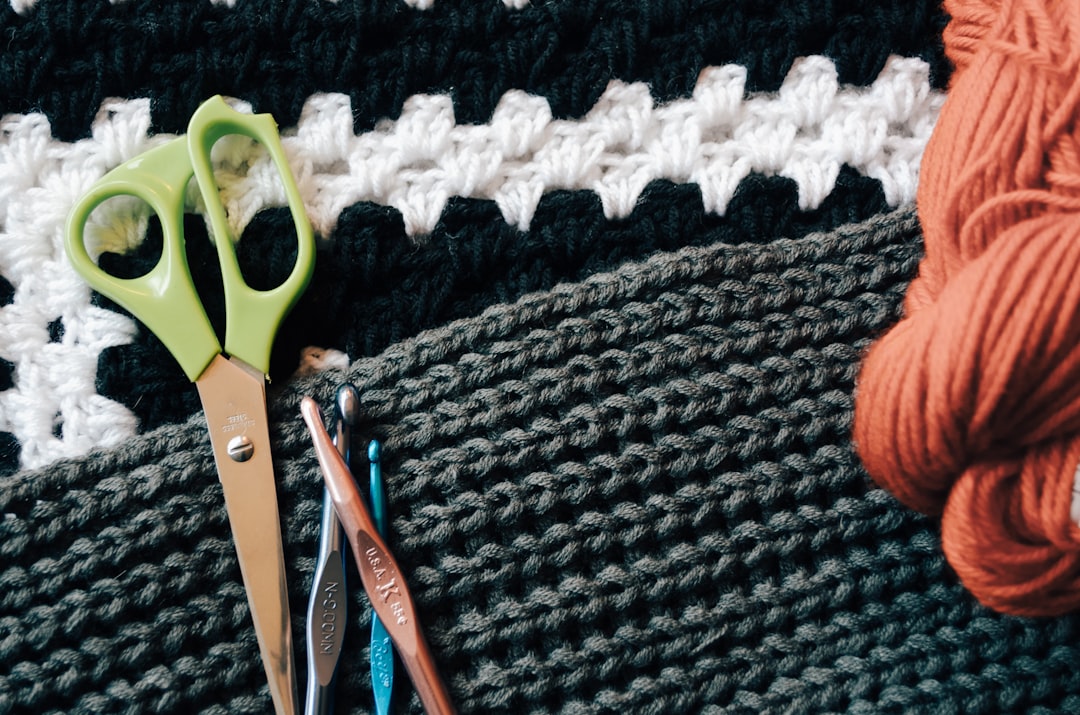
- Crochet Hook: Hooks come in various sizes, typically measured in millimeters or by US/UK sizing. The hook size should be chosen based on the yarn weight and the desired fabric density. A common starting point for double crochet with medium-weight yarn is an H-8 (5.0 mm) hook.
- Yarn: Yarn is the primary material. It comes in numerous fibers (e.g., wool, acrylic, cotton) and weights (e.g., fingering, worsted, bulky). For beginners, a smooth, light-colored yarn in a medium weight (worsted weight) is recommended as it is easy to see stitches and manipulate.
- Scissors: A pair of sharp scissors is needed for cutting yarn.
- Stitch Markers: These small tools are helpful for marking specific stitches, such as the beginning of a row or pattern repeats.
Creating a Slip Knot
The slip knot is the initial loop that attaches the yarn to the crochet hook.
- Form a loop with the yarn, ensuring the tail end is behind the working yarn.
- Bring the working yarn over the loop and pull it through the loop to create a new loop.
- Place this new loop onto your crochet hook.
- Pull both the tail and working yarn to tighten the knot onto the hook.
The Foundation Chain
A foundation chain is a series of chain stitches that forms the base of your crochet piece.
- With the slip knot on your hook, yarn over your hook.
- Pull the yarn over through the loop on your hook. This completes one chain stitch.
- Repeat this process to create the desired number of chains for your project.
When working subsequent rows of double crochet, you will typically skip a specific number of beginning chains to achieve the correct stitch height.
Step-by-Step Guide to Double Crochet
This section will guide you through the process of creating a single double crochet stitch and then incorporating it into rows of fabric.

CROCHET HOOK SET: This set of Knit Picks Double Ended Crochet Hooks contains hooks, 5 3/8" in length, with ends in size 2.0, 3.0, 3.5, 4.0, 4.5, 5.0, 5.5 and 6.0mm along with 2 blunt tip tapestry needles

Crochet Hook Set: Ergonomic handles crochet hooks, smooth surface, lightweight, and durable. Includes 10 sizes aluminum crochet hooks, that can meet your different needs

VERSATILE SET: Complete set of 4 double-ended Tunisian crochet hooks in essential sizes - 3mm, 4mm, 5mm, and 6mm for various yarn weights
Making Your First Double Crochet Stitch
Follow these steps precisely to form a single double crochet stitch:
- Yarn Over (yo): Wrap the working yarn from front to back over your crochet hook. You will now have two loops on your hook.
- Insert Hook: Insert the tip of your crochet hook into the designated stitch or chain. For your very first double crochet, this is usually the fourth chain from the hook (counting your hook as the first chain). The skipping of the first three chains accounts for the height of the double crochet stitch.
- Yarn Over (yo): Wrap the working yarn from front to back over your hook again.
- Pull Up a Loop: Draw this new yarn over through the chain or stitch. You will now have three loops on your hook.
- Yarn Over (yo): Wrap the working yarn from front to back over your hook a third time.
- Pull Through Two Loops: Pull this yarn over through the first two loops on your hook. You will now have two loops remaining on your hook.
- Yarn Over (yo): Wrap the working yarn from front to back over your hook for the fourth time.
- Pull Through Remaining Two Loops: Pull this yarn over through the final two loops on your hook. This completes one double crochet stitch.
Working a Row of Double Crochet
Once you can make a single double crochet stitch, the next step is to create a fabric by working multiple stitches in a row.
- Begin with a Foundation Chain: Create a foundation chain of the desired length for your project. For practice, a chain of 15-20 stitches is sufficient.
- First Double Crochet: As described above, work your first double crochet stitch into the fourth chain from the hook.
- Continue Across the Row: Work one double crochet stitch into each subsequent chain stitch across the foundation chain. When you reach the end of the chain, you have completed your first row of double crochet.
Turning and Starting a New Row
To continue building your fabric, you need to turn your work and create a turning chain to establish the height for the next row.
- Chain Up for Height: At the end of a row, chain 3 stitches. This “turning chain” counts as the first double crochet of the new row.
- Turn Your Work: Rotate your crochet piece so that the back of the previous row is now facing you, and you are ready to work back across the row.
- Begin the New Row: Work your first double crochet stitch into the second stitch of the row below (skip the very first stitch as the turning chain counts as that stitch).
- Continue Across: Work one double crochet stitch into each remaining stitch across the row.
Common Mistakes and How to Avoid Them
Even with clear instructions, beginners may encounter challenges. Recognizing common mistakes and understanding how to correct them is as vital as knowing the stitch itself.
Uneven Tension
Uneven tension is a frequent issue where some stitches are significantly tighter or looser than others.
- Causes: Inconsistent yarn tension, gripping the hook too tightly or too loosely, and varying the pressure on the yarn.
- How to Avoid:
- Practice: Consistent tension develops with practice. Aim to hold the yarn and hook with a relaxed but controlled grip.
- Yarn Management: Develop a consistent method for managing your working yarn. Some crocheters feed yarn from the center of the skein, others from the outside. Experiment to find what works best for you.
- Relaxation: Consciously try to relax your hands and arms as you crochet. Holding tension in your shoulders and hands will inevitably transfer to your stitches.
- Hook Positioning: Ensure your hook is consistently positioned relative to the yarn.
Skipping Stitches
Forgetting to work into a stitch, often at the beginning or end of a row, can lead to the fabric tapering.
- Causes: Distraction, miscounting stitches, or the turning chain being mistaken for a stitch.
- How to Avoid:
- Count Stitches: Make a habit of counting your stitches at the end of each row. This is your primary safeguard.
- Use Stitch Markers: Place a stitch marker in the first and last stitch of a row, particularly when learning. This clearly defines the boundaries of your row.
- Understand the Turning Chain: Remember that the turning chain (usually 3 chains for dc) counts as the first stitch of the new row. Therefore, you typically work your first full dc into the second stitch of the row below.
Dropping Loops
Accidentally letting a loop slip off the hook can cause dropped stitches, leading to holes or unraveling.
- Causes: Hook slipping out of a loop, hook being too large for the yarn, or the working yarn snagging.
- How to Avoid:
- Secure Hook: Always maintain at least one loop on your hook. When moving between stitches, ensure the working loop remains securely on the hook.
- Appropriate Hook Size: Use a hook size recommended for your yarn or that feels comfortable and secure with the yarn you are using.
- Smooth Yarn: If your yarn tends to snag, try holding it more carefully to avoid catching it on rough edges.
Misinterpreting Pattern Instructions
Many patterns use abbreviations. Misunderstanding these can lead to incorrect stitch placement.
- Causes: Unfamiliarity with crochet abbreviations.
- How to Avoid:
- Glossary: Most crochet patterns include a glossary of abbreviations. Refer to it frequently.
- Online Resources: Numerous websites and YouTube channels offer tutorials on common crochet abbreviations and techniques.
If you’re looking to expand your crochet skills beyond double crochet, you might find it interesting to explore different crafting techniques. For instance, creating adorable air-dry clay figures can be a fun complement to your crochet projects. You can check out this article on how to make an air-dry clay chubby tabby cat, which provides a delightful way to incorporate your love for crafting into a new medium.
Mastering Double Crochet for Various Projects
| Double Crochet Metrics | Value |
|---|---|
| Stitch Height | Approximately 0.5 inches |
| Stitch Width | Varies based on yarn and hook size |
| Common Uses | Creating fabric with a looser texture |
| Difficulty Level | Intermediate |
Once you have a solid understanding of the double crochet stitch and can work it consistently, you can begin to apply it to a range of projects.

Master Tunisian Stitches with Ease: Elevate your skills with KnitPal’s double-ended crochet hooks, designed for seamless, reversible, and multicolor projects. Perfect for beginners and experienced crafters alike.

Master Tunisian Stitches with Ease: Elevate your skills with KnitPal’s double-ended crochet hooks, designed for seamless, reversible, and multicolor projects. Perfect for beginners and experienced crafters alike.
Understanding Gauge Swatches
A gauge swatch is a small sample of crochet fabric worked in a specific stitch pattern, usually double crochet, using the recommended hook and yarn. Its purpose is to measure the number of stitches and rows that fit within a specified measurement (e.g., 4 inches by 4 inches).
- Importance: Most crochet patterns specify a gauge. Working a gauge swatch ensures your finished project will be the correct size. If your swatch is too small, you need a larger hook; if it’s too large, you need a smaller hook.
- Method: Crochet a piece at least 5-6 inches square using the specified stitch and yarn. Wash and block it as you would the final project. Measure the number of stitches and rows within a 4-inch area.
Applying Double Crochet to Simple Projects
The double crochet stitch is ideal for many beginner-friendly projects.
- Scarves: A simple scarf can be made by crocheting a rectangle of double crochet stitches to the desired length and width. The turning chain and stitch count are crucial for creating a straight edge.
- Blankets: Similar to scarves, blankets are often constructed as large rectangles or by joining smaller squares (granny squares, which often incorporate double crochet).
- Dishcloths/Washcloths: The absorbency and durability of cotton yarn make double crochet dishcloths a practical choice. The slightly open nature of the double crochet can also aid in drying.
Incorporating Double Crochet into More Complex Projects
As your skills advance, you can integrate double crochet into more intricate designs.
Textured Stitches Using Double Crochet
The basic double crochet can be modified or combined with other stitches to create interesting textures.
- Front Post Double Crochet (FPdc): This stitch creates a raised, ribbed texture. You work the double crochet stitch by inserting your hook around the post of the stitch below, rather than into the stitch itself.
- Back Post Double Crochet (BPdc): Similar to FPdc, but you insert your hook behind the post of the stitch. This creates a similar raised effect but from the opposite side. Alternating FPdc and BPdc can create a beautiful cable-like texture.
- Combining with Other Stitches: Double crochet forms a substantial base for stitches like popcorn stitches, bobbles, or clusters, which add surface embellishment and dimension.
Shaping with Double Crochet
For garments and accessories that require shaping (e.g., sleeves, necklines), you will need to increase and decrease stitches.
- Increases: To increase stitches, you work two or more double crochet stitches into a single stitch or chain space of the row below. This widens the fabric. A common increase is to work two dc in the same stitch.
- Decreases: To decrease stitches, you work two or more double crochet stitches together, effectively creating a single stitch where there were multiple. A common decrease is to work two dc stitches together (often abbreviated as “dc2tog”). This involves starting the first dc, stopping when two loops remain on the hook, then starting the second dc in the next stitch and completing it when three loops remain on the hook, then pulling through all three loops. This narrows the fabric.
If you’re looking to expand your crochet skills beyond double crochet, you might find it interesting to explore other crafting techniques. For instance, creating unique home decor items can be a fun way to apply your creativity. A great article that showcases how to make air dry clay spoon rests can be found here. This project could complement your crochet pieces beautifully, adding a personal touch to your kitchen.
Tips for Continuous Improvement
Consistent practice and a willingness to learn new techniques will solidify your mastery of the double crochet stitch.
Practice Regularly
The most effective way to improve any skill is through consistent application. Dedicate regular time to crocheting, even if it’s just for a short period each day. Look for opportunities to practice the double crochet stitch, whether by working on existing projects or creating small practice pieces.
Experiment with Different Yarns and Hooks
As you become more comfortable, experiment with different yarn fibers, weights, and hook sizes. This will help you understand how these variables affect the fabric’s drape, density, and overall appearance. For instance, using a larger hook with a thicker yarn will produce a looser, faster-growing fabric, while a smaller hook with finer yarn will result in a denser, more detailed fabric.
Engage with Crochet Communities
Online forums, social media groups, and local crochet circles offer invaluable resources and support. Sharing your work, asking questions, and observing others’ techniques can provide new insights and solutions to challenges you may encounter. Many experienced crocheters are happy to share their knowledge and offer constructive feedback.
Seek Out New Patterns
Once you feel confident with the basic double crochet, explore patterns that utilize the stitch in different ways. Look for patterns that introduce increases, decreases, or combinations with other stitches. This will expand your understanding of the stitch’s capabilities and push your skills further. Consider patterns that involve working in rounds versus rows, as this requires different turning techniques and can present new challenges and learning opportunities.
Mastering the double crochet stitch is a journey, not a destination. Each stitch you make contributes to your growing expertise, opening doors to a world of creative possibilities within the realm of crochet.