Crafting Comfort: The Art of Crochet
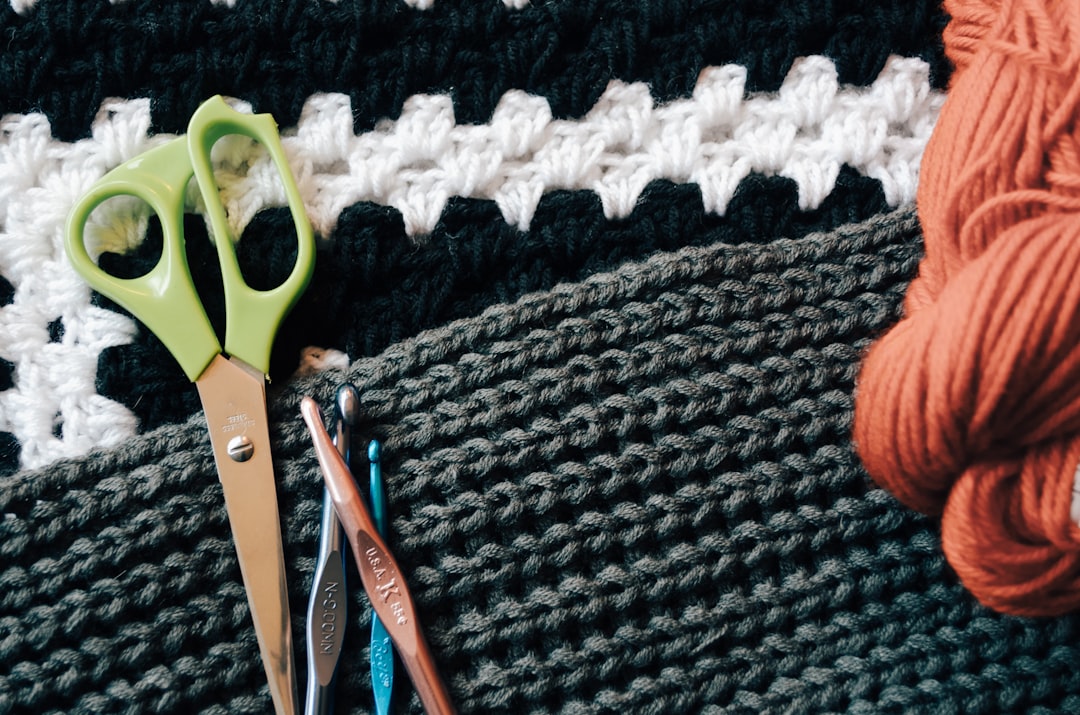
Crochet is a method of creating fabric from yarn or thread using a crochet hook. The word “crochet” is derived from the French term “crochet,” meaning “small hook.” This craft involves interlacing loops of material to form a textile. The process differs from knitting in that crochet uses a single hook to create stitches, whereas knitting employs two needles. Historically, crochet has been a practical skill, providing clothing, blankets, and household items. Its evolution reflects changes in material availability, fashion trends, and the socio-economic roles of craftspeople.
The exact origins of crochet are debated among textile historians. Unlike knitting, which has ancient archaeological evidence, the earliest documented instances of what we recognize as crochet appear relatively late in European history. This lack of definitive ancient artifacts has led to several theories regarding its genesis.
Theories of Origin
One prominent theory suggests crochet evolved from indigenous fiber crafts practiced globally. For example, some speculate that various forms of knotting and looping found in cultures across South America, Asia, and Africa might represent ancestral techniques. These techniques, while not identical to modern crochet, share the fundamental principle of creating fabric from a single thread and a single implement.
Another theory posits that crochet developed from embroidery techniques, specifically Tambour embroidery, which originated in India and spread to Turkey and then Europe in the 18th century. Tambour work uses a fine hook to create chain stitches on a stretched fabric base. It is conceivable that this technique was adapted, with the fabric base eventually removed, allowing the stitches to be worked independently in the round or in rows.
A third theory proposes that crochet is a younger craft, truly emerging in the early 19th century. Early written patterns and illustrations, often from France, suggest a more recent European invention. Madame Riego de la Branchardière, an Irish designer, is often credited with popularizing crochet patterns in the mid-19th century, referring to the technique as “crochet tricot” (knitted crochet). Her publications were instrumental in standardizing stitches and disseminating the craft.
Development through the Centuries
The 19th century saw crochet flourish, particularly in Ireland, where it became a significant source of income for women during the Great Famine. Irish crochet lace, characterized by its intricate, raised floral motifs and fine thread, became highly sought after, offering economic relief to many struggling families. This period marked a shift from simple, utilitarian crochet to more elaborate, decorative forms.
By the early 20th century, crochet continued to be a popular domestic craft. Magazines and pattern books frequently featured designs for clothing, home décor, and accessories. The availability of diverse yarns and threads, coupled with evolving fashion trends, ensured its continued relevance. During both World Wars, crochet was also utilized for making practical items for soldiers, such as socks, scarves, and blankets, embodying a spirit of resourcefulness and comfort.
The mid-20th century witnessed a decline in crochet’s popularity, as mass-produced textiles became more accessible and affordable. However, the craft experienced a resurgence in the 1960s and 70s, fueled by the counter-culture movement’s emphasis on handmade goods and self-expression. Granny squares, vibrant and modular motifs, became iconic symbols of this period.
In the 21st century, crochet has seen another revitalization, driven by online communities, social media platforms, and a growing appreciation for handmade items and sustainable practices. Independent designers and small businesses have embraced crochet, showcasing its versatility and artistic potential.
If you’re interested in exploring more about crafting materials and their safety, you might find this article on air-dry clay particularly insightful. It discusses whether air-dry clay is food safe, which is essential knowledge for crafters who want to incorporate their creations into functional items. You can read more about it here: Is Air Dry Clay Food Safe?. This information can be quite useful for crochet enthusiasts looking to combine different crafting techniques in their projects.
Essential Tools and Materials
To embark on your crochet journey, you will need a few fundamental tools and materials. Understanding their purpose and characteristics is key to successful crafting.
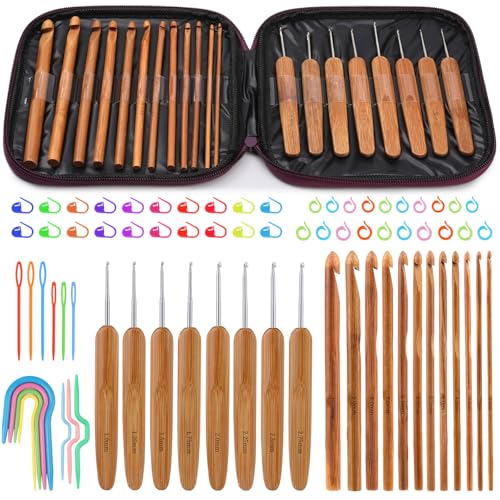
Crochet Hooks Set: 20 Bamboo crochet hooks kit all zipped into a convenient carrying case! The crochet hook set includes 12 crochet hooks in US sizes C to N (metric sizes 3 to 10 mm) as well as 8 steel hooks with bamboo handles in sizes 1 to 2.75 mm. Each hook is marked with its metric size, you can tell with a glance which hook to pick up. Scale clear, so don't worry about being worn off like a rubber handle

【ERGONOMIC CROCHET HOOK SET】Compared to the most frequent bare metal crochet hooks, Coopay's crochet hooks ergonomic you don’t have to hold it too tight and making the crochet needle much easier to hold for older fingers. Alleviates your hand fatigue and prevent arthritic hands.

Crochet Hooks
The crochet hook is the primary tool. Hooks come in various materials, sizes, and styles.
Materials
- Metal hooks: Aluminum and steel are common. Aluminum hooks are generally lighter and widely available, suitable for most yarn types. Steel hooks, often smaller, are used for fine threads, such as those for lace making.
- Plastic hooks: These are lightweight and often inexpensive, available in a wide range of colors and larger sizes.
- Wooden/Bamboo hooks: These offer a warm, natural feel and can be comfortable to hold, especially for those with hand sensitivities. Their surface often has a slight grip, which can be helpful for slippery yarns.
Sizes
Hook sizes are designated by letters (in the US) or numbers (in the UK, Canada, and metric systems). Larger hooks create looser stitches and are used with thicker yarns, while smaller hooks produce tighter stitches and are employed with finer threads. The chosen hook size should complement the yarn weight to achieve the desired fabric density and drape. A common mistake newcomers make is using a hook that is too small or too large for their chosen yarn; this often leads to frustration. The yarn label usually recommends an appropriate hook size, serving as a useful starting point.
Styles
Some hooks have ergonomic handles designed to reduce hand fatigue. These can be particularly beneficial for those who crochet for extended periods or who experience wrist or hand pain. The shape of the hook’s head also varies; inline hooks have a head that is the same diameter as the shaft, while tapered hooks have a pointier head that narrows before the shaft. Each style offers a slightly different feel and can influence the ease with which you draw yarn through stitches.
Yarn and Thread
Yarn is the fiber material used in crochet. It comes in a vast array of compositions, weights, and colors.
Fiber Types
- Natural fibers: These include wool, cotton, linen, silk, and bamboo. Each offers distinct properties. Wool is warm and elastic, suitable for garments. Cotton is breathable and absorbent, ideal for dishcloths and summer wear. Silk provides luxurious drape, while linen offers crispness and durability.
- Synthetic fibers: Acrylic, polyester, and nylon are common synthetics. Acrylic is affordable, durable, and comes in many colors, making it excellent for beginner projects and items needing frequent washing. Polyester and nylon are often used for specialty yarns or blends to add strength and resilience.
- Blends: Many yarns combine natural and synthetic fibers to leverage the best properties of each, for instance, wool-acrylic blends for warmth and durability.
Yarn Weights
Yarn weight refers to its thickness. It’s important because it dictates the needle size and the fabric’s gauge (stitches per inch). Standard categories range from Lace (finest) to Jumbo (thickest). Common weights include Fingering, Sport, DK (Double Knitting), Worsted, Bulky, and Super Bulky. The yarn label often provides a standardized weight category symbol, simplifying selection. Using a yarn weight that is too heavy for a delicate pattern or too light for a robust one will alter the final outcome significantly.
Additional Notions
Beyond hooks and yarn, a few other items are helpful:
- Scissors: For cutting yarn.
- Yarn needle/Tapestry needle: A blunt-tipped needle with a large eye, used for weaving in ends and seaming pieces together. This is crucial for creating a neat, finished appearance.
- Stitch markers: Small clips or rings used to mark specific stitches, helpful for counting rows, defining pattern repeats, or identifying the beginning of a round.
- Measuring tape: Essential for checking gauge (the number of stitches and rows per specified measurement) and ensuring your project will be the correct size.
- Row counter: A simple device to help you keep track of the number of rows or rounds completed, preventing errors in multi-row projects.
Fundamental Crochet Stitches
Mastering a few basic stitches unlocks a world of possibilities in crochet. These stitches form the building blocks for virtually all crochet patterns.
The Slip Knot and Chain Stitch
Every crochet project begins with a slip knot and a series of chain stitches.
- Slip Knot: This forms the initial loop on your hook. It is adjustable and secures the yarn. You wrap the yarn around your fingers, creating a loop, then draw a working end of the yarn through it, tightening it onto the hook.
- Chain (ch) Stitch: The chain stitch is the foundation of most crochet pieces. To make a chain stitch, you “yarn over” (wrap the yarn from back to front over the hook) and pull the yarn through the loop on your hook. Repeating this action creates a series of interlocking loops, forming a chain. This chain acts as the cast-on edge in knitting, providing the base from which you build your fabric. Without a steady, even chain, the first row of your project will be uneven and difficult to work into.
Single Crochet (sc)
The single crochet is one of the most fundamental and compact stitches. It creates a dense, sturdy fabric.
- Execution: Insert your hook into the second chain from the hook (or specified stitch). Yarn over, pull up a loop (you now have two loops on your hook). Yarn over again, and pull through both loops on the hook. This completes one single crochet stitch.
- Characteristics: Single crochet produces a relatively short, tight stitch. It is ideal for projects requiring rigidity, such as amigurumi (stuffed toys), baskets, or sturdy bags.
Half Double Crochet (hdc)
The half double crochet stitch is taller than a single crochet but shorter than a double crochet, offering a middle ground in fabric density and drape.
- Execution: Yarn over, insert your hook into the specified stitch. Yarn over, pull up a loop (three loops on your hook). Yarn over, and pull through all three loops on the hook.
- Characteristics: This stitch provides a slightly looser fabric than single crochet, with more drape. It works well for blankets, scarves, and garments where a balance between density and flexibility is desired.
Double Crochet (dc)
The double crochet stitch is a versatile and commonly used stitch, creating a taller, more open fabric.
- Execution: Yarn over, insert your hook into the specified stitch. Yarn over, pull up a loop (three loops on your hook). Yarn over, pull through the first two loops (two loops remaining). Yarn over again, pull through the last two loops.
- Characteristics: Double crochet creates a fabric with good drape and texture. It is frequently used for shawls, blankets, sweaters, and anything requiring a less dense, quicker-to-grow fabric. Its height allows projects to progress quickly.
Treble Crochet (tr) or Triple Crochet
The treble crochet is one of the tallest basic stitches, resulting in an open, airy fabric.
- Execution: Yarn over twice, insert your hook into the specified stitch. Yarn over, pull up a loop (four loops on your hook). Yarn over, pull through the first two loops (three loops remaining). Yarn over, pull through the next two loops (two loops remaining). Yarn over again, pull through the final two loops.
- Characteristics: Treble crochet creates a very open and lacy fabric. It is often used in lace patterns, openwork designs, or to add height and texture to garments. Due to its openness, it uses less yarn than more compact stitches for the same area but can be less warm.
Reading Crochet Patterns and Charts
To move beyond simple swatches and create complex projects, understanding how to read patterns and charts is essential. This often feels like learning a new language, but with practice, it becomes intuitive.
Standard Pattern Abbreviations
Crochet patterns utilize a standardized system of abbreviations to compress instructions. Familiarity with these is crucial.
- ch: chain stitch
- sc: single crochet
- hdc: half double crochet
- dc: double crochet
- tr: treble crochet
- sl st: slip stitch (used for joining rounds or moving yarn without adding height)
- yo: yarn over
- st(s): stitch(es)
- rnd(s): round(s)
- row(s): row(s)
- sk: skip
- inc: increase (making two stitches into one space to widen the fabric)
- dec: decrease (working two stitches together to narrow the fabric)
- rep: repeat
- **\* or ():** indicates a section to be repeated a specific number of times.
Understanding context is important. For instance, “ch 3” means “make three chain stitches,” while “sc 5” means “make a single crochet in each of the next five stitches.” Pay close attention to numbers and punctuation, as they dictate the sequence of operations.
Understanding Gauge and Swatching
Gauge refers to the number of stitches and rows per a measured unit (e.g., 4 inches or 10 cm) using a specific hook and yarn combination. It is perhaps the most critical, yet frequently overlooked, aspect of pattern following.
- Why Gauge Matters: If your gauge differs significantly from the pattern’s specified gauge, your finished project will be either too large or too small. A difference of even a few stitches per inch can drastically alter the final dimensions of a garment. It can be the difference between a beautifully fitting sweater and one that is unwearably oversized or too tight.
- The Swatch: Before starting a project, especially a garment or anything size-critical, you must create a gauge swatch. This is a small sample using the recommended yarn and hook. Typically, a pattern will instruct you to crochet a square (e.g., 6 inches by 6 inches) and then measure the stitches and rows within a smaller, central area (e.g., 4 inches by 4 inches), avoiding the edges where tension can be inconsistent.
- Adjusting Gauge: If your swatch has too many stitches per inch, your tension is too tight; try a larger hook. If your swatch has too few stitches per inch, your tension is too loose; try a smaller hook. Continue swatching and adjusting until your gauge matches the pattern’s. This preliminary step saves considerable time and frustration in the long run.
Crochet Charts or Diagrams
Beyond written patterns, some instructions are presented as charts or diagrams. These are visual representations of the crochet stitches.
- Symbols: Each basic stitch has a specific symbol: a chain is an oval, a single crochet is an ‘X’ or ‘+’, a half double crochet is a ‘T’, a double crochet is a ‘T’ with one slash, and a treble crochet is a ‘T’ with two slashes. Other symbols exist for increases, decreases, clusters, and more intricate stitches.
- Reading Direction: Charts are typically read from right to left for odd-numbered rows and left to right for even-numbered rows (if working in rows). For working in the round, they are read counter-clockwise, starting from the center.
- Benefits: Charts can be incredibly helpful for visual learners and for complex lace patterns or colorwork, where seeing the stitch placement makes more sense than reading long written instructions. They offer a holistic view of the fabric structure. However, they require familiarity with the symbols. Many patterns now include both written instructions and charts to accommodate different learning preferences.
If you’re looking to expand your crafting skills beyond crochet, you might find interest in creating unique home decor items. One fascinating project is making an air dry clay ashtray, which can add a personal touch to your living space. For a detailed guide on how to create this functional art piece, check out this informative article on making an air dry clay ashtray. This project complements your crochet creations beautifully and offers a great way to explore different crafting techniques.
Beyond the Basics: Advanced Techniques and Applications
| Metrics | Data |
|---|---|
| Number of Crochet Hooks | 10 |
| Types of Crochet Stitches | Single, Double, Half-double, etc. |
| Hours Spent Crocheting | 20 hours per week |
| Completed Crochet Projects | 15 |
Once you have mastered the fundamental stitches, the world of advanced crochet techniques opens up, allowing for greater creativity and diverse project possibilities.


All-In-One Crochet Starter Kit: CROCHETTA beginner crochet kit includes everything you need to start: 12 different colored yarns, ample stuffing, 1 yarn needles, 6 safety eyes, 5 stitch markers, 2 ergonomic crochet hooks, 1 pair of scissors, 1 hot melt glue, 1 flower stem, 1 crochet plants pattern, and a beginner's basic crochet manual.

🦖6 ANIMALS IN ONE BOX — 6× THE PRACTICE, NOT JUST ONE: Crochet a whole family — owl, fox, chick, dinosaur, whale & axolotl, each about 3.5 inches. While most crochet kit for beginners make a single animal, six projects let you repeat each stitch again and again and visibly improve with every one — the fastest way to actually learn, at a fraction of the cost per animal
Amigurumi
Amigurumi is the Japanese art of crocheting small, stuffed yarn creatures. It typically involves working in the round with single crochet stitches to create a dense fabric that holds its shape when stuffed.
- Key Characteristics: Amigurumi often features seamlessly joined pieces, color changes, and shaping through increases and decreases. Attention to detail, such as embroidered faces and small accessories, brings these characters to life.
- Techniques: Common techniques include the “magic ring” or “magic circle” to start rounds without a hole in the center, working in continuous spirals rather than joining rounds, and precise stuffing to achieve desired firmness and shape. Safety eyes and noses are frequently used for features.
- Applications: Amigurumi projects range from simple geometric shapes to complex, intricately detailed animals, characters, and even food items. They serve as toys, decorative objects, or delightful gifts.
Tunisian Crochet
Tunisian crochet, sometimes called Afghan crochet, is a unique technique that uses an elongated hook with a stopper at the end. It combines elements of both knitting and crochet, as stitches are held on the hook similarly to knitting, but worked with a single hook.
- Process: Tunisian crochet involves two passes for each row: a “forward pass” where loops are picked up onto the hook, and a “return pass” where loops are worked off the hook. This creates a dense, often woven-like fabric.
- Stitches: There are numerous Tunisian crochet stitches, each yielding a distinct texture. Popular stitches include Tunisian Simple Stitch (TSS), Tunisian Knit Stitch (TKS), and Tunisian Purl Stitch (TPS).
- Fabric Characteristics: Tunisian crochet fabric tends to be thicker, less stretchy, and more structured than regular crochet. It is less prone to gaping and offers interesting textural possibilities.
- Applications: It is well-suited for blankets, garments (especially those requiring structure like jackets or cardigans), placemats, and sturdy bags. Its unique appearance and texture make it a distinctive craft in itself.
Filet Crochet
Filet crochet is a technique that creates designs using open and closed mesh squares. It is often executed with fine thread and small hooks to produce delicate, lace-like fabrics.
- Construction: The basic building blocks are open squares (usually formed by a double crochet, chain 2, skip 2, double crochet) and solid (or closed) squares (formed by four double crochet stitches). By strategically combining these, intricate pictures, words, or geometric patterns can be rendered.
- Charting: Filet crochet patterns are typically presented as charts, resembling graph paper, where filled squares indicate solid blocks and empty squares indicate open blocks.
- Applications: Traditionally used for tablecloths, placemats, doilies, curtains, and decorative edgings. It produces heirlooms reminiscent of antique lace.
Colorwork Techniques
Crochet offers several methods for incorporating multiple colors into a project.
- Stripes: The simplest form of colorwork involves changing colors at the end of a row or round, creating horizontal stripes.
- Fair Isle/Stranded Crochet: Similar to its knitting counterpart, Fair Isle crochet involves carrying multiple colors across a row, working with one color at a time and “stranding” the unused colors behind the work. This creates a dense, warm fabric and complex, repeating geometric patterns. Care must be taken to maintain even tension on the carried strands to prevent puckering.
- Intarsia Crochet: In Intarsia, large blocks of color are created without carrying the yarn across the entire piece. Instead, separate bobbins of yarn are used for each color section, dropped and picked up as needed. This method avoids bulky fabric and is suitable for pictorial designs.
- Tapestry Crochet: This technique involves working with two or more colors simultaneously, crocheting over the unused color(s) to completely enclose them within the stitches. This creates a very dense, firm fabric and is excellent for crisp, graphic designs and intricate color changes, often used for bags, rugs, and robust items.
If you’re interested in exploring more creative crafting techniques, you might find the article on using air dry clay for plant pots quite intriguing. This resource provides insights into how to incorporate different materials into your projects, which can complement your crochet work beautifully. For more details, check out this informative piece on air dry clay and discover new ways to enhance your crafting experience.
The Therapeutic Benefits of Crochet
Beyond its practical and artistic applications, crochet offers a wealth of mental and emotional benefits. Engaging in this repetitive, creative activity can be a powerful tool for well-being.

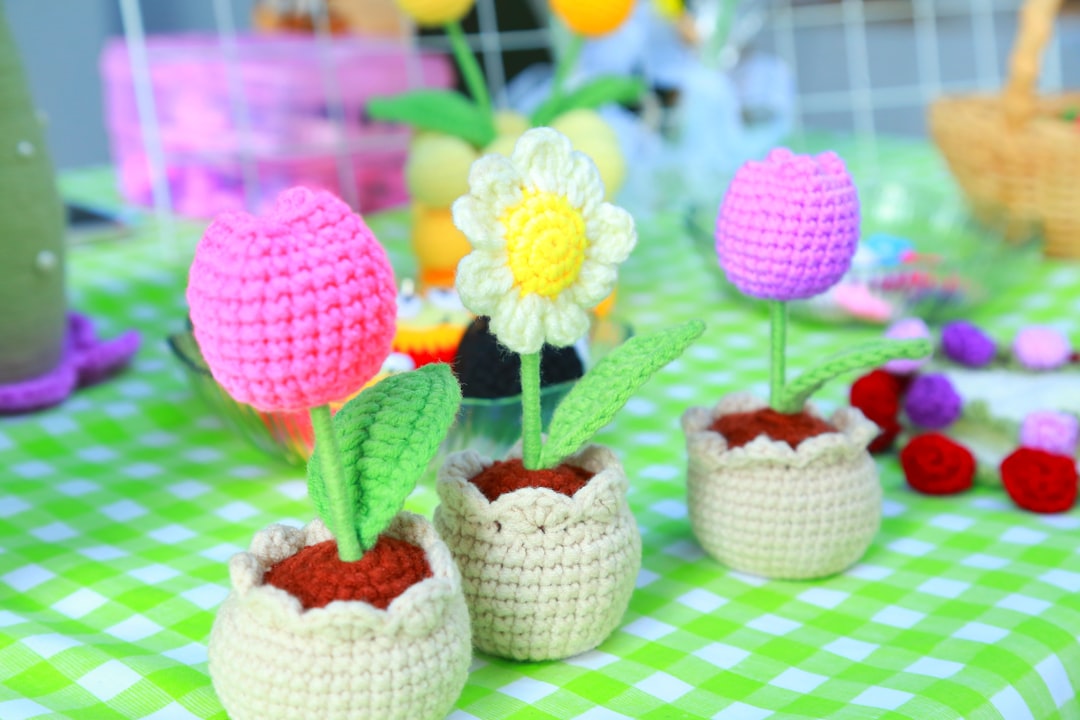
Complete Crochet Kit: Contains all essential supplies: 6 colors of beginner-friendly yarn, stuffing, safety eyes, an ergonomic crochet hook, yarn needle, stitch markers, wire, gasket, and step-by-step instructions with video. Nothing extra to buy, everything needed to create 2 adorable potted flower Amigurumi is included. An ideal crochet kit for beginners.

Versatile Crochet Set: Our crochet kits include 12 pieces different sized hooks from 2mm to 8mm to suit all your crochet needs. You will also get 25 colorful crochet stitch markers(Random colors), 9 darning needles, 1 scissors(Random color), 1 row counter, 1 crochet ring cutter(Random color), 1 measuring tape and 1 crochet hook case. The perfect knitting and crochet supplies, crochet accessories and crochet starter kit
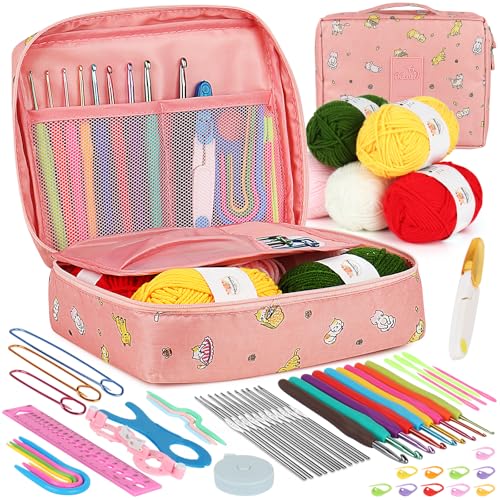
Everything You Need to Start Crocheting: Aeelike crochet kits for beginners includes ergonomic crochet hooks, lace steel hooks, colorful yarn, stitch markers, sewing needles, pompom makers, measuring tools, scissors, and a zip storage bag. Plus, you get a printed step-by-step instruction book and easy video tutorials to learn basic techniques at your own pace.
Stress Reduction and Mindfulness
The rhythmic, repetitive motion of crochet can induce a meditative state, much like other repetitive crafts or activities. Focusing on the stitches, counting rows, and following a pattern requires concentration, which can divert attention from stressors and anxieties. This process promotes mindfulness, bringing you into the present moment and away from distracting thoughts about the past or future. The tangible progress of forming fabric, stitch by stitch, provides a sense of accomplishment and control.
Cognitive Enhancement
Crochet engages several cognitive functions. Reading patterns requires interpretation and understanding of a symbolic language. Counting stitches and rows improves numerical literacy and memory. Following intricate designs can enhance problem-solving skills and spatial reasoning. The fine motor skills required for manipulating the hook and yarn can improve hand-eye coordination and dexterity. For individuals learning new skills or wanting to maintain cognitive agility, crochet offers a stimulating mental workout.
Social Connection and Community
Crochet is often a solitary activity but can also be a significant source of social connection. Crocheters frequently gather in local groups, online forums, and social media communities to share patterns, offer advice, troubleshoot problems, and showcase their work. These communities provide a sense of belonging, foster friendships, and offer support. Sharing knowledge and passion for the craft can combat feelings of isolation and build strong bonds. Participating in charitable crochet projects, such as making blankets for hospitals or hats for the homeless, further enhances this sense of community and purpose.
Sense of Accomplishment and Self-Esteem
Completing a crochet project, whether it’s a simple dishcloth or a complex blanket, provides a tangible representation of effort and skill. This sense of accomplishment can significantly boost self-esteem and confidence. The ability to create something beautiful and functional with your own hands is empowering. Receiving compliments on handmade items or successfully gifting a cherished creation further reinforces these positive feelings. Overcoming challenges in a pattern or mastering a new technique also contributes to a feeling of growth and mastery.
Creative Expression
Crochet is a medium for artistic expression. The vast array of yarn colors, textures, and stitch patterns allows for endless creative possibilities. You can choose to follow a pattern precisely or adapt it, experiment with color combinations, design your own unique items, or combine different textures. This creative freedom provides an outlet for personal aesthetic and transforms simple yarn into a reflection of personal style and imagination. The tactile nature of working with yarn also adds another dimension to this creative process.