Are you an aspiring crafter, a seasoned artist, or simply someone looking for a new creative outlet? When it comes to sculpting and modeling, two popular mediums often vie for your attention: polymer clay and air-dry clay. Both offer incredible versatility and endless creative possibilities, but when your budget is a primary consideration, a clear winner emerges. This article will meticulously dissect the cost implications of working with both polymer clay and air-dry clay, helping you make an informed decision about which medium is more affordable for your projects and creative aspirations.
Before delving into the intricate details, it’s crucial to establish a foundational understanding: air-dry clay is consistently more affordable than polymer clay. This isn’t just a slight difference; it’s a significant financial advantage. For most projects, you can expect air-dry clay to cost you anywhere from one-fifth to one-third of what you would spend on polymer clay. This substantial price differential makes air-dry clay the unequivocal choice for budget-conscious crafters and anyone planning larger-scale creations.
Why Air-Dry Clay Reigns Supreme in Affordability
You might be wondering why such a stark difference exists. It largely comes down to the manufacturing process, the materials used, and the additional equipment required. Air-dry clay, in its most basic form, is designed to cure at room temperature, eliminating a significant step in the crafting process and, consequently, its cost. Polymer clay, on the other hand, is a plastic-based modeling compound that requires baking at a specific temperature to harden, adding another layer of expense.
Raw Material and Manufacturing Simplicity
Think about it: air-dry clay often consists of natural materials like cellulose fibers, paper pulp, and bonding agents, making its production relatively straightforward and less energy-intensive. Polymer clay, however, is a synthetic material, a type of plasticized PVC (polyvinyl chloride). The chemical processes involved in its creation and the need for specific additives to create its unique pliable and bakeable consistency contribute to its higher price point. You’re essentially paying for a more complex, engineered product with polymer clay.
Economies of Scale in Air-Dry Clay Production
Because air-dry clay is so widely used in educational settings, children’s crafts, and general hobbyist projects, it benefits from economies of scale. Manufacturers produce it in massive quantities, which helps to drive down the per-unit cost. Polymer clay, while popular, caters to a more niche market of serious crafters, jewelers, and artists, which can lead to higher production costs per unit.
Diving Deep into Price Per Ounce: A Direct Comparison
To truly grasp the cost difference, let’s examine the price per ounce, which offers a granular view of your expenditure. This metric is perhaps the most telling indicator of affordability between the two mediums.
Polymer Clay: The Premium Per Ounce Price
When you pick up a package of polymer clay, you’ll notice that even a modest amount can carry a significant price tag. For instance, a popular brand like Sculpey Premo typically costs you somewhere between $13 and $15 for an 8-ounce package. This translates to a relatively high cost per ounce, reflecting its specialized nature and the qualities it offers. You are paying for its strength, detail retention, and specific baking properties.
Brand-Specific Polymer Clay Costs
While Sculpey Premo is a widely recognized brand, other polymer clay brands like Fimo, Kato Polyclay, and Cernit also fall into a similar price range per ounce. Some artist-grade polymer clays, designed for very specific applications and offering superior strength or translucent qualities, can even exceed these prices. As you explore different brands, you’ll generally find that the cost per ounce remains consistently higher than that of air-dry clay.
Small Projects, Higher Relative Cost
Even for small projects where you might only use a few ounces of polymer clay, the initial investment for a small block can feel substantial. If you’re making tiny earrings or miniature figurines, you might not use a whole 8oz package, but the cost of that entire package still factors into your overall crafting budget. This makes it feel like a higher-stakes purchase, even if you’re not consuming it all at once.
Air-Dry Clay: The Budget-Friendly Bulk
Contrast the polymer clay prices with air-dry clay. A common and reliable brand like DAS air-dry clay, for example, can be purchased for $10 to $14 for a massive 35-ounce package. Let that sink in for a moment. You are getting approximately 4.4 times more clay for a similar price! This incredible value instantly positions air-dry clay as the superior choice for anyone prioritizing cost efficiency.
Mass Market Availability and Lower Per Ounce Cost
The sheer volume of clay you get for your money with air-dry clay is a game-changer. This makes it ideal for experimentation, practice, and large-scale projects without the constant worry of depleting an expensive material. The accessibility of these larger packages in art supply stores, craft stores, and even general retailers contributes to their lower price point and widespread appeal.
Everyday Examples of Air-Dry Clay Affordability
Beyond DAS, other excellent and affordable air-dry clay options exist. Consider brands like Crayola for practice pieces, especially if you’re trying out new techniques or encouraging children to explore sculpting. While some niche, artist-grade air-dry clays can be pricier, standard options like DAS and Sculpey’s own air-dry line consistently remain the most cost-effective. You’ll find that these brands make creative exploration incredibly accessible,
removing financial barriers to artistic expression.
Project Cost Examples: From Trinkets to Tiles
Let’s move from theoretical per-ounce costs to practical project economics. How do these price differences translate when you’re actually making something? This is where the cost disparity truly shines through.
Polymer Clay: Investing in Each Creation
When you decide to craft a small trinket dish or a pair of earrings with polymer clay, you’re looking at a material cost of approximately $5 to $10 for that single item. This cost reflects the higher price per ounce of the clay itself, meaning that even a small amount of product carries a notable financial weight.
The Value Proposition of Polymer Clay Projects
Of course, the higher cost of polymer clay often comes with advantages. Your polymer clay trinket dish will likely be more durable, potentially water-resistant (depending on sealing), and capable of holding finer details than its air-dry counterpart. If you’re creating items for sale where durability and intricate design are paramount, this higher material cost might be justified by the perceived value and longevity of the finished product. However, for casual crafting or gifts, the expense can quickly add up.
Batch Production Challenges
If you envision creating multiple similar polymer clay items, the material cost can become a significant factor. For example, if you want to make ten small trinket dishes as gifts, you could easily spend $50 to $100 just on the clay. This necessitates careful planning and budgeting if you’re working with polymer clay on a larger scale.
Air-Dry Clay: Creating for Pennies
In stark contrast, crafting that same small trinket dish with air-dry clay typically costs you a mere $1 to $2 in material. This dramatic difference means you can create multiple items, experiment freely, and provide materials for a group without breaking the bank.
The Freedom of Low-Cost Prototyping
This low project cost makes air-dry clay an excellent medium for prototyping. If you have an idea for a sculpture or a functional item, you can quickly mock it up in air-dry clay to test its form, balance, and aesthetics without a significant financial commitment. If it doesn’t work out, you haven’t lost much. This encourages experimentation and reduces the pressure associated with using expensive materials.
Ideal for Group Activities and Educational Settings
Air-dry clay’s affordability also makes it the go-to choice for workshops, school projects, and group crafting sessions. You can provide ample material for many participants without worrying about prohibitive costs. Imagine running a craft night where everyone can create their own unique piece for just a dollar or two each in material cost – that’s the power of air-dry clay.
Bulk Buying: Maximizing Your Savings
For those planning ambitious projects, or simply wanting to stock up, the difference in bulk pricing between polymer clay and air-dry clay is astonishing. This is where air-dry clay truly shines as the undisputed champion of affordability.
Polymer Clay: Limited Bulk Options, Higher Cost
While you can purchase larger blocks or multi-packs of polymer clay, truly “bulk” options are less common and still relatively expensive. For example, a 400-gram (roughly 14-ounce) package of polymer clay might range from $10 to $20. While this offers a slight improvement on the per-ounce cost compared to smaller packages, it’s nowhere near the value you get with air-dry clay.
Specialty Retailers and Professional Supplies
Larger quantities of polymer clay are often found in specialty art supply stores or online retailers catering to professional artists. These “bulk” purchases are still far from what you might consider truly economical for large-scale projects, and the price per pound remains significantly higher than that of air-dry clay. You’re typically paying for the brand reputation, consistent quality, and specific artistic properties.
Managing Inventory and Shelf Life
Given its higher cost, you might be more inclined to purchase polymer clay in smaller, as-needed quantities to avoid tying up capital or worrying about potential shelf-life issues. While polymer clay generally has a long shelf life if stored correctly, the initial investment for larger amounts can feel daunting.
Air-Dry Clay: The Bulk Bargain Hunter’s Dream
This is where air-dry clay truly sets itself apart. You can readily find massive 5-pound buckets of air-dry clay averaging a mere $10 to $15. That’s five pounds of creative potential for what you might spend on a small block of polymer clay. This incredible value makes it perfect for large sculptures, multiple projects, or simply ensuring you always have creative material on hand.
Cost-Effective for Large-Scale Works
If you’re envisioning a substantial sculpture or a series of decorative items, a 5-pound bucket of air-dry clay provides an immense amount of material without denting your wallet. This allows for grander artistic ambitions without the financial constraint imposed by more expensive mediums. You can sculpt, refine, and even discard pieces without feeling a pang of regret over wasted material.
Best Budget Brand: Sculpey Air-Dry
For those particularly focused on maximizing savings without sacrificing quality, Sculpey Air-Dry, especially when available at retailers like Walmart, is often cited as the most affordable and effective option for beginners. Its accessibility and excellent price point make it a fantastic starting point for anyone exploring air-dry clay. You get reliability and a good working consistency at a price that is truly unbeatable.
The Hidden Costs: What You Don’t See on the Sticker
| Clay Type | Cost |
|---|---|
| Polymer Clay | Higher initial cost due to purchasing clay and baking supplies |
| Air Dry Clay | Lower initial cost as it does not require baking and additional supplies |
Beyond the initial price of the clay itself, there are other crucial cost factors to consider. These “hidden costs” can significantly sway the overall affordability of your chosen medium.
Polymer Clay: Equipment Adds Up
The most significant hidden cost associated with polymer clay is the requirement for an oven. Polymer clay does not cure at room temperature; it must be baked at a specific temperature for a set amount of time to harden.
The Oven Conundrum
While you might use your home oven, this ties it up, potentially interferes with food preparation, and some crafters worry about fumes, although most modern polymer clays are considered non-toxic when baked correctly. Many dedicated polymer clay artists invest in a small, separate toaster oven or a dedicated craft oven. This is an additional purchase that directly adds to your overall polymer clay crafting budget. An inexpensive toaster oven might cost $30-$50, but a more reliable, temperature-controlled craft oven can be $100 or more.
Other Polymer Clay Accessories
Beyond the oven, polymer clay often benefits from specific accessories for optimal results. You might choose to invest in a pasta machine for conditioning and rolling clay evenly, specialized cutting tools, texture sheets, and various sculpting implements. While not all of these are strictly necessary, they enhance the polymer clay crafting experience and can gradually add to your expenditure.
Baking-Related Energy Costs
Though often overlooked, the electricity or gas used to bake your polymer clay projects is also a recurring cost. While small per session, if you’re baking frequently, these energy costs accumulate over time.
Air-Dry Clay: Bare Bones Budgeting
This is where air-dry clay truly shines as the minimalist’s choice. It requires no oven, no specialized heating equipment, and therefore, incurs no associated energy costs for curing.
Simplicity of Tools
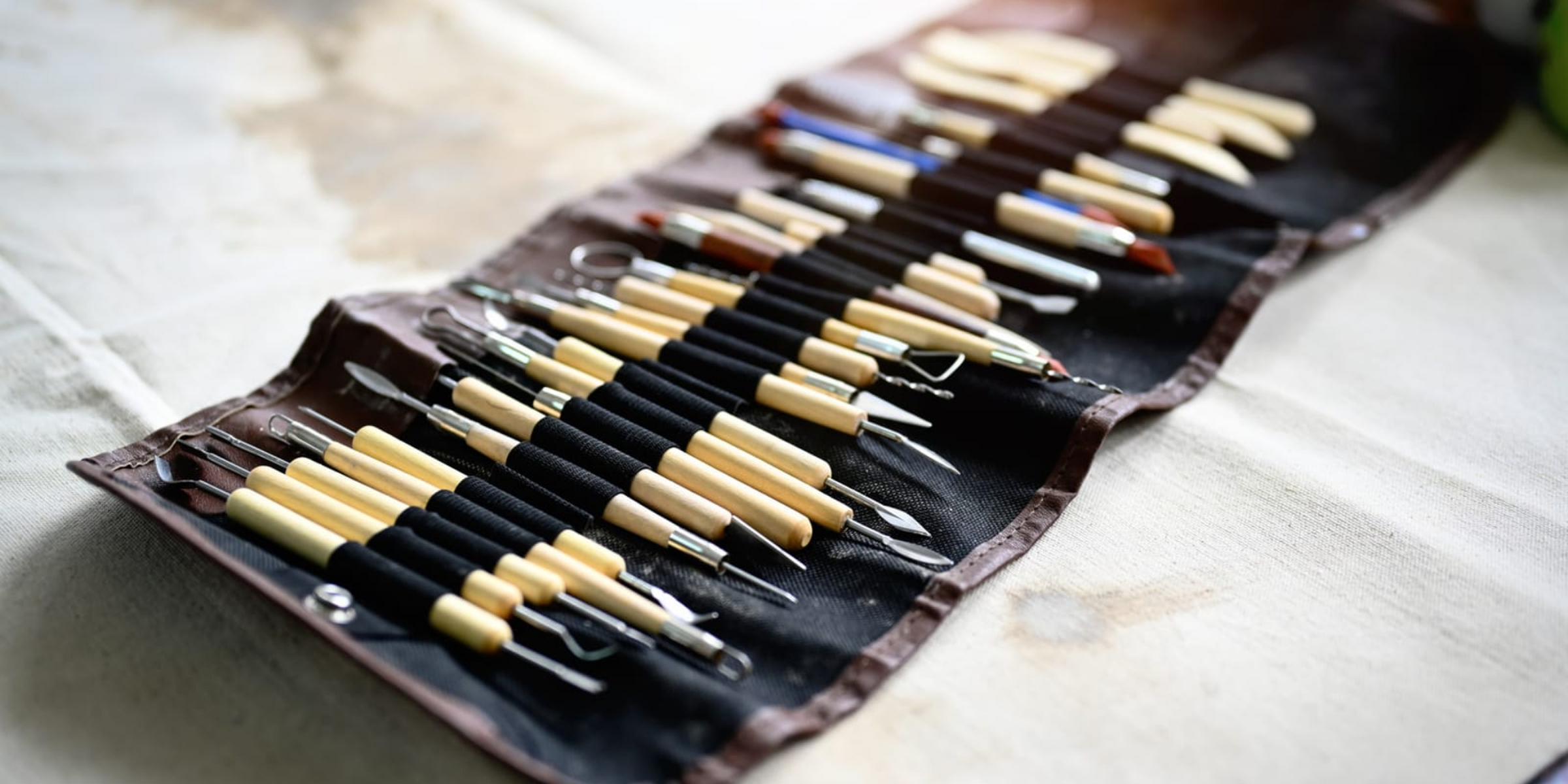
For air-dry clay, your existing kitchen utensils, craft knives, and perhaps some simple sculpting tools are often more than sufficient. You don’t need an expensive pasta machine; a rolling pin works perfectly. This minimal equipment requirement drastically reduces your initial setup costs and makes air-dry clay incredibly accessible to anyone, regardless of their budget for specialized tools.
No Energy Consumption for Curing
The fact that air-dry clay hardens by simply being exposed to the air is its most significant hidden cost advantage. You don’t have to factor in oven purchases, electricity bills for baking, or the worry of tying up your kitchen appliance. This makes air-dry clay an environmentally friendlier option regarding energy consumption for curing as well.
Storage and Preventing Drying
The only “hidden cost” to be mindful of with air-dry clay is proper storage. If not sealed correctly in an airtight container or bag, it can dry out and become unusable. This isn’t a monetary cost as much as it is a diligence requirement to prevent spoilage of your materials. However, a simple plastic container or a few zip-top bags solve this challenge effectively and affordably.
Exceptions and Nuances: When Price Isn’t Everything
While air-dry clay is overwhelmingly the more affordable option, it’s important to acknowledge that there are nuances and situations where the cost-benefit analysis might shift slightly.
High-End Air-Dry Clays
As mentioned, while standard options like DAS and Sculpey Air-Dry are incredibly cost-effective, some specialized or artist-grade air-dry clays can indeed be pricier. These might offer unique properties like extreme light weight, specific textures, or enhanced durability for air-dry applications.
Artist-Grade Options and Their Niche
If you’re a professional artist seeking very specific characteristics in an air-dry medium, you might find yourself exploring these more expensive brands. However, for the vast majority of crafters and general projects, the standard, more affordable options are perfectly adequate and perform admirably. Don’t feel pressured to buy the most expensive air-dry clay unless you have a very specific, high-end application in mind.
Durability and Performance Trade-offs
It’s also worth noting that some very cheap, practice-grade air-dry clays (like some varieties of Crayola) might be excellent for experimentation but could be less durable or robust for final pieces compared to slightly higher-quality, yet still affordable, options like DAS. For projects that need to last, a small bump in price for a more reliable standard air-dry clay is a worthwhile investment.
Polymer Clay’s Enduring Value (Beyond Cost)
While undoubtedly more expensive, polymer clay earns its keep through specific strengths that air-dry clay cannot replicate.
Superior Durability and Water Resistance
If you’re making jewelry, functional items that will be handled frequently, or pieces that require a degree of water resistance, polymer clay is the clear winner. Once baked, it becomes extremely durable, resistant to shattering, and often quite flexible, depending on the brand and thickness. Air-dry clay, while it hardens, can be more brittle and is generally not water-resistant without proper sealing.
Fine Detail and Intricate Work
Polymer clay allows for incredibly fine detail and intricate work thanks to its pliability and ability to hold shape before baking. This makes it ideal for miniature sculpting, complex patterns, and detailed jewelry components where air-dry clay might struggle to achieve the same precision without cracking or losing form as it dries.
Color Blending and Curing Properties
Polymer clay comes in an astounding array of vibrant, permanent colors that can be blended seamlessly to create custom shades. The colors remain true after baking, and the curing process at controlled temperatures ensures consistent hardness. Air-dry clay often dries to a lighter, more matte finish and typically needs to be painted for vibrant colors, adding another step and potential cost.
Conclusion: Making Your Choice with Confidence
When weighing polymer clay vs. air-dry clay on the scales of cost, the verdict is clear: air-dry clay is consistently and significantly more affordable. For budget-conscious crafters, beginners, those undertaking large projects, or anyone who wants to experiment without financial worry, air-dry clay is the superior choice. You’ll save money on the material itself, get substantially more product for your buck, and completely eliminate the need for costly baking equipment.
However, if your creative endeavors demand superior durability, water resistance, intricate detail, or a vast range of vibrant, permanent colors, and you’re willing to invest more financially, then polymer clay is a worthwhile choice. It offers unique properties that justify its higher price point for specific applications like jewelry making or highly detailed artistic pieces.
Ultimately, your decision comes down to your project goals, your budget, and what qualities you prioritize in your finished work. But remember, for sheer affordability and accessibility, air-dry clay stands as the undisputed champion, allowing you to unleash your creativity without breaking the bank.
FAQs
1. What is the cost difference between polymer clay and air dry clay?
The cost of polymer clay is generally higher than air dry clay. Polymer clay is a synthetic modeling material that requires baking in an oven to harden, while air dry clay hardens on its own without the need for baking.
2. What factors contribute to the cost difference between polymer clay and air dry clay?
The cost difference between polymer clay and air dry clay can be attributed to the materials used in their production, the manufacturing process, and the additional equipment required for polymer clay (such as an oven for baking).
3. Are there any additional costs associated with using polymer clay compared to air dry clay?
Yes, in addition to the higher initial cost of polymer clay, users will also need to factor in the cost of an oven for baking the clay. This can add to the overall cost of using polymer clay compared to air dry clay.
4. Are there any cost-saving tips for using polymer clay instead of air dry clay?
One cost-saving tip for using polymer clay is to maximize the use of the oven by baking multiple pieces at once. This can help reduce the overall energy cost of using polymer clay.
5. In terms of longevity, which clay type offers better value for the cost?
Both polymer clay and air dry clay offer good value for their cost, but the longevity of polymer clay may be slightly better due to its synthetic nature and the ability to withstand wear and tear over time.