You’re embarking on a creative journey, and like any skilled artisan, you understand that the right materials can make or break your masterpiece. When working with air dry clays, one of the most critical, yet often overlooked, factors is their inherent strength. You’ve likely experienced the frustration of a beautifully sculpted piece crumbling in your hands or cracking during the drying process. To prevent this heartbreak and elevate your craft, you need to understand the nuances of air dry clay strength. This guide will equip you with the latest insights, drawing from a 2025 study in the Journal of Material Arts Education and a 2026 craft guide [7], so you can confidently choose the best clay for your next project.
Before diving into specific brands and types, it’s crucial for you to grasp what constitutes “strength” in air dry clay. It’s not a single characteristic but rather a combination of factors that dictate how your finished piece will endure. When you hear about clay strength, think about how it resists deformation, breakage, and surface damage.
Tensile Strength: The Pull Resistance
Imagine trying to stretch your clay creation. Tensile strength measures the maximum stress a material can withstand while being stretched or pulled before breaking. This is particularly important for delicate, thin, or intricate designs where the clay needs to hold its form against pulling forces. The latest data from 2025 reveals a significant range in tensile strength among air dry clays, varying from a meager 1.8 MPa to a robust 5.4 MPa [7].
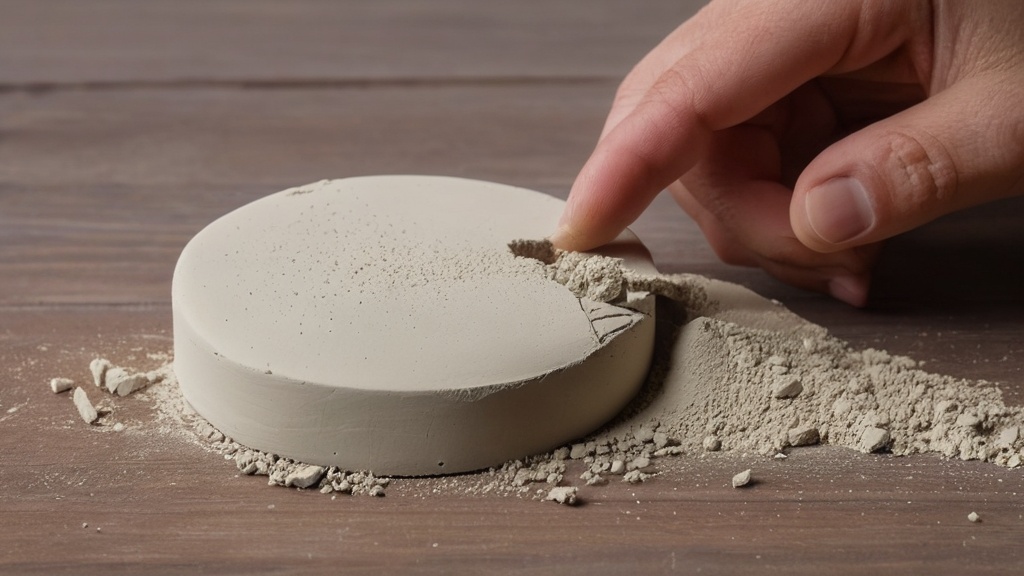
- Low Tensile Strength (1.8 MPa): If you’re working with clay on the lower end of this spectrum, you’ll find it brittle and prone to crumbling, especially during tasks like light sanding. Imagine trying to smooth an edge only to have it flake away – that’s a sign of low tensile strength. This type of clay might be suitable for decorative, non-functional items that won’t experience any stress.
- High Tensile Strength (5.4 MPa): Conversely, clays with high tensile strength are your allies for precision work. They hold crisp edges beautifully, allowing for intricate details to remain intact. Furthermore, they are robust enough to accept drill bits without shattering, opening up possibilities for adding hardware, creating articulated pieces, or incorporating them into mixed-media projects. This level of strength indicates a material that will resist snapping and hold its shape even under moderate stress.
Compressive Strength: The Crush Resistance
While tensile strength deals with pulling, compressive strength defines how well your clay can resist forces that push or squeeze it. Think about stacking objects on your clay sculpture or an accidental drop – compressive strength is what dictates if it will withstand the pressure or crumble. The 2026 data categorizes compressive strength by clay type, offering you a clear hierarchy of durability [6].
- Traditional Air Dry Clay: These general-purpose clays typically offer a compressive strength of 500–800 psi. They are a good starting point for many projects but might not endure significant impact or heavy loads.
- Paper Clay: Infused with paper fibers, these clays are known for their lightweight nature and often exhibit improved strength due to the interlocking fibers. Their compressive strength ranges from 800–1200 psi, making them a more durable option than traditional clays, especially for larger or more structural pieces.
- Polymer-Modified Clays: These clays incorporate synthetic polymers to enhance their properties, including strength. With compressive strengths of 1200–1800 psi, they offer a substantial upgrade in durability, resisting crushing forces effectively. You’ll find these suitable for items that need to withstand more wear and tear.
- Stone Clay: The Toughest Challenger: If ultimate compressive strength is your goal, look no further than stone clay. Boasting an impressive 1500–2500 psi, it stands out as the highest in this category [6]. This type of clay is engineered to mimic the resilience of natural stone, making it incredibly resistant to impact and compression.
Crack Resistance: Battling the Elements
Beyond tensile and compressive strength, you’re constantly battling the dreaded enemy of air dry clay: cracking. Cracks can appear during the drying process, often due to uneven drying, shrinking, or internal stresses. A clay’s ability to resist cracking is a crucial indicator of its overall quality and your potential for a successful finished piece.
- Shrinkage Control: High-quality air dry clays are formulated to minimize shrinkage as they dry, which is a primary cause of cracking. Less shrinkage means less internal stress pulling the clay apart.
- Flexibility During Drying: Some clays maintain a degree of flexibility even as they firm up, allowing them to better accommodate the drying process and reduce the likelihood of tears or cracks.
- Internal Binder Integrity: The binders within the clay play a significant role in holding the particles together. Strong, resilient binders contribute to a more cohesive structure that resists fracturing.
Evaluating Top Performers: Brands That Deliver Strength
Now that you understand the mechanics, let’s turn to the brands that consistently stand out in terms of strength and durability. The 2026 evaluations highlight several top-tier choices that will serve you well, minimizing disappointment and maximizing the lifespan of your creations [1][2][8].
Dependable Brands for Robust Creations
You’ll find that certain brands have consistently proven their mettle, offering excellent crack resistance and overall sturdiness. When you need reliability, these are your go-to options.
- DAS and Creative (aka Fimo Air): These brands are consistently lauded for their strength and versatility. The 2026 evaluation specifically noted that DAS and Creative did not crack even when wrapped around plastic forms for planters, demonstrating remarkable flexibility and resilience during drying [2]. This suggests excellent internal integrity and controlled shrinkage, making them ideal for projects requiring structural soundness.
- Jovi, Mont Mart, and Kadink: If you’re willing to invest a little more time in drying, these brands will reward you with superior strength. The 2026 data indicates a direct correlation between longer drying times and higher strength for Jovi, Mont Mart, and Kadink [8]. Importantly, these brands did not crumble like some cheaper alternatives, offering you a reliable and robust outcome. This extended drying time allows for a more thorough curing process, resulting in a denser, stronger material.
The Exceptional Durability of Cold Porcelain
For truly outstanding durability, especially for delicate forms, you should consider cold porcelain. While often homemade from cornstarch and glue, it’s celebrated for its unique properties.
- Exceptional Durability: Cold porcelain is renowned for its resilience. Pieces made from this material can resist snapping and shattering, even with very thin sections [1]. This makes it an excellent choice for intricate jewelry, delicate figurines, or floral arrangements where fine details are paramount and fragility is a concern.
- Smooth Finish and Flexibility: Beyond strength, cold porcelain also offers a remarkably smooth finish and a degree of flexibility once dry, further contributing to its resistance to breakage.
The Promise of Ultra-Hard Air-Dry Clay
Imagine clay that dries “hard as concrete.” That’s the exciting prospect offered by a new ultra-hard air-dry clay tested between 2024–2025. This innovative material stands as the hardest non-kiln air-dry clay evaluated, surviving a direct drop onto concrete without breaking [5].
- Unmatched Hardness: If your project demands an extreme level of hardness and impact resistance, this new ultra-hard clay is a game-changer. It pushes the boundaries of what’s possible with air-drying materials.
- Limitations: However, it’s crucial for you to remember its limitations. Despite its incredible hardness, it still cannot hold water or be used for food-safe items [5]. This means it’s best suited for purely decorative or sculptural pieces where functionality related to liquids or ingestion is not required.
Navigating the Pitfalls: Brands to Avoid for Strength
Just as there are champions of strength, there are also brands that consistently fall short, leading to frustration and wasted effort. Understanding which clays to avoid, particularly if strength is a priority, will save you considerable trouble. The 2026 evaluations clearly identify these weaker contenders [2][8].
The Fragile and Frustrating
You’ll find that some brands are simply not built to last, quickly cracking or crumbling under even modest conditions.
- Amico: This brand is consistently cited as a poor performer. The 2026 guide explicitly states that Amico cracked easily and was among the least sturdy options evaluated [2]. If you choose Amico, prepare for potential structural failures in your finished work.
- Crayola: While a familiar name, Crayola air dry clay generally proves less strong than DAS-type clays. Although it might not crumble as severely as some other cheap brands, it is prone to cracking [2][8]. For anything beyond very basic, non-functional projects, you’re better off with a more robust alternative.
The Generic and Unreliable
Be wary of inexpensive, generic brands. While their price point might be attractive, the compromise on strength and durability is often significant.
- Boil, Anko, Elements of Art, Crafters Corner, and “Monm”: These brands were consistently ranked as “very weak” in recent evaluations [8]. The particularly damning assessment of “Monm,” which “fell apart in hand,” illustrates the extreme fragility you might encounter with such low-cost options [8]. You’re likely to experience significant cracking, crumbling, and a general lack of structural integrity when working with these.
- The Lure of Low Cost: Remember that in the world of air dry clay, price often correlates directly with quality and strength. While a bargain might seem appealing, the resulting disappointment from a fragile creation can be far more costly in terms of your time and effort.
Optimizing Your Technique for Maximum Strength
Your choice of clay is paramount, but your application and drying techniques also play a significant role in maximizing its inherent strength. Even the most robust clay can be compromised by improper handling.
Proper Conditioning and Mixing
Before you even begin sculpting, ensure your clay is properly prepared.
- Kneading: Always knead your air dry clay thoroughly to eliminate air bubbles and create a uniform consistency. Air bubbles trapped within the clay can weaken its structure and lead to cracks during drying.
- Hydration: If your clay is too dry, it will be brittle and prone to cracking. If it’s too wet, it will be difficult to sculpt and may shrink excessively. Achieve the right consistency for optimal workability and strength.
Thickening and Armatures
For larger or more complex pieces, you’ll need to think about internal support.
- Even Thickness: Try to maintain a relatively consistent thickness throughout your sculpture. Areas that are significantly thicker or thinner than others will dry at different rates, leading to internal stress and potential cracking.
- Internal Armatures: For substantial pieces, use an armature made of wire, foil, or other lightweight materials. This provides internal support and reduces the amount of clay needed, thereby minimizing shrinkage and stress on the clay. The 2026 data highlighting DAS and Creative’s ability to be wrapped around plastic for planters underscores the importance of a stable core [2].
Controlled Drying Environment
The drying process is where many pieces meet their demise. Control over the environment is crucial for preventing cracks and maximizing strength.
- Slow and Even Drying: The most critical rule for air dry clay is to dry it slowly and evenly. Rapid drying can lead to surface hardening while the interior remains wet, causing uneven shrinkage and severe cracking.
- Avoid Direct Heat: Never place air dry clay in direct sunlight, on a heater, or in an oven unless specifically instructed by the manufacturer (which is rare for true air dry clay). These methods will accelerate drying too quickly.
- Covering and Turning: For larger or thicker pieces, you might need to cover them lightly with plastic wrap or a damp cloth for the first few days to slow down the initial drying. Turn your pieces regularly to expose all sides to the air, promoting even drying.
- Humidity Control: A moderately humid environment is ideal. Too dry, and the clay cracks; too humid, and it takes excessively long to dry and might be susceptible to mold.
Finishing for Durability
Once dry, you can further enhance the strength and longevity of your creations.
- Sanding and Smoothing: Smooth out any rough edges or imperfections with fine-grit sandpaper. While low tensile strength clays might crumble here (1.8 MPa mentioned earlier!), stronger clays (up to 5.4 MPa) will hold crisp edges and sand beautifully [7].
- Sealing: Apply a good quality sealant, varnish, or acrylic paint to your dried clay. This creates a protective barrier against moisture, dust, and minor abrasions, significantly increasing the lifespan and durability of your piece. Look for sealants that are non-yellowing and suitable for crafts.
Making Your Informed Choice in 2026 and Beyond
| Clay Type | Strength (psi) |
|---|---|
| Polymer Clay | 1,500 |
| Paper Clay | 800 |
| Earthenware Clay | 1,200 |
| Stoneware Clay | 2,000 |
To sum it up, as you move forward with your creative endeavors in 2026, you now possess a comprehensive understanding of air dry clay strength. Your success hinges on informed choices.
For maximum strength, minimal cracking, and overall reliability, you should unequivocally lean towards stone clay, polymer-modified clays, or top-performing brands like DAS, Fimo/Creative, Jovi, Mont Mart, or Kadink [1][2][6][7][8]. And for unparalleled thinness and resilience, especially for intricate details, cold porcelain is your best bet [1]. Don’t forget the exciting potential of the new ultra-hard air-dry clay for projects demanding extreme durability [5].
Conversely, for any project where durability matters, you should actively avoid Amico, Crayola, and the host of very weak, low-cost generic brands such as Boil, Anko, Elements of Art, Crafters Corner, and especially “Monm” [2][8]. These options will likely lead to frustration, cracking, and a fragile finished product that falls short of your artistic vision.
By selecting the right clay and employing mindful sculpting and drying practices, you’re not just creating art; you’re crafting lasting pieces that will stand the test of time, exhibiting the strength and resilience your dedication deserves. Go forth and create with confidence!
FAQs
What is air dry clay?
Air dry clay is a type of modeling clay that hardens when left to dry in the air, without the need for baking or firing in a kiln. It is a popular choice for craft projects and sculpting due to its ease of use and accessibility.
How does the strength of air dry clay compare to other types of clay?
In general, air dry clay is not as strong or durable as other types of clay such as polymer clay or kiln-fired clay. It is more prone to cracking and breaking, especially when subjected to pressure or impact.
What factors affect the strength of air dry clay?
The strength of air dry clay can be affected by various factors, including the brand and quality of the clay, the thickness of the clay when sculpted, the amount of water used during the sculpting process, and the drying conditions (humidity, temperature, etc.).
Are there ways to improve the strength of air dry clay?
There are some techniques that can help improve the strength of air dry clay, such as adding additional layers of clay for reinforcement, using armatures or supports within the sculpture, and allowing the clay to dry slowly and evenly to reduce the risk of cracking.
What are some alternative options for stronger clay sculptures?
If strength and durability are important factors for a project, alternatives to air dry clay include polymer clay, which can be baked to harden, and kiln-fired clay such as stoneware or porcelain, which offer superior strength and durability.