So, you’ve felt the call of the clay. You’ve envisioned miniature worlds, intricate jewelry, or perhaps sturdy, functional vessels. The possibilities are as vast as your imagination, but before you dive headfirst into a swirling vortex of creative energy, there’s a crucial first step: choosing the right clay. This isn’t a decision to be taken lightly, for the clay you select will fundamentally shape your experience, from its texture under your fingertips to the final durability and appearance of your finished piece. Think of it as choosing your primary paintbrush or your foundational fabric; it sets the stage for everything that follows.
Many beginners are understandably daunted by the sheer variety of clays available. You might wander through a craft store aisle, bombarded by terms like “polymer,” “air-dry,” “stoneware,” and “earthenware,” each promising unique benefits. It’s easy to feel overwhelmed. However, with a little guidance, you’ll soon find yourself confidently navigating this landscape, selecting the perfect clay that aligns with your project goals, skill level, and desired outcome. This guide is designed to empower you, to demystify the world of clay, and to ensure your crafting endeavors are met with success and satisfaction. We’ll explore the most popular options, breaking down their characteristics, benefits, and ideal applications, so you can make informed choices and bring your most ambitious creative visions to life.
Decoding the Diversity: Understanding the Core Clay Types
The vast spectrum of clays can be broadly categorized into a few main families, each with its own distinct properties and applications. Understanding these fundamental differences is your first and most important step. You’ll encounter these categories repeatedly as you explore further, so consider this your foundational knowledge base.
Polymer Clay: The Versatile Workhorse
Polymer clay has earned its reign as the go-to material for countless crafters, and for good reason. Its inherent flexibility and workability make it exceptionally user-friendly, and its transformative baking process unlocks incredible durability and a professional finish. Unlike natural clays, polymer clay remains pliable until it’s cured in a standard home oven, giving you ample time to refine your designs, add intricate details, and even experiment with different techniques. This extended working time is a significant advantage, especially for those who enjoy meticulous detail or complex sculpting.
- ### The Untamed Potential of Polymer Clay
The magic of polymer clay lies in its composition. It’s a pliable modeling material made from a base of polyvinyl chloride (PVC), plasticizers, and pigments. When you knead and shape it, the heat from your hands slightly softens the plasticizers, making it more malleable. The real transformation, however, occurs when you bake it. The heat causes a permanent chemical reaction, fusing the PVC particles together and creating a hard, durable plastic. This irreversible process is what makes polymer clay so reliable for long-lasting creations.
- ### Why Polymer Clay Reigns Supreme for Many
Think of polymer clay as your highly adaptable artistic partner. Its staying power is remarkable – it won’t dry out or crack while you’re working on it, which is a huge relief for projects that require patience and precision. This makes it an ideal choice for intricate jewelry components, miniature figurines, detailed embellishments, and even small decorative items. The ability to achieve sharp details is a key advantage, allowing you to sculpt delicate patterns, create sharp edges, and bring small-scale designs to life with remarkable clarity.
- ### Navigating the Landscape of Polymer Clay Brands
While the core concept of polymer clay remains consistent, the market offers a variety of brands, each with its own subtle nuances. These differences can impact the clay’s texture, flexibility, and how well it holds fine details. Familiarizing yourself with these distinctions will help you choose the perfect polymer clay for your specific needs.
Beginner-Friendly Options
If you’re just dipping your toes into the world of polymer clay, starting with a beginner-friendly option is wise. These clays are often softer and easier to condition (a process of softening the clay through kneading), making them less physically demanding to work with.
Sculpey III: Your Welcoming Introduction
Sculpey III is frequently highlighted as an excellent starting point for newcomers to polymer clay. Its softer consistency makes it quite pliable right out of the package, reducing the effort needed to make it workable. This ease of use allows beginners to focus on developing their sculpting and shaping skills without struggling with overly stiff clay. While it’s very user-friendly, it’s worth noting that for extremely fine detail or projects requiring exceptional strength, more advanced options might be preferred. However, for general crafting, jewelry making, and simple figurines, Sculpey III is a fantastic and accessible choice.
Advanced and Specialty Polymer Clays
As your skills progress and your projects become more demanding, you’ll likely want to explore polymer clays designed for more advanced techniques and superior durability. These clays often offer enhanced strength and the ability to hold finer details.
Sculpey Premo™: The All-Rounder for Detail and Strength
Sculpey Premo is a highly respected polymer clay that strikes an excellent balance between workability, strength, and detail retention. It’s a favorite among experienced crafters for its ability to hold intricate sculpting and fine lines beautifully. Premo is more robust than Sculpey III and offers greater flexibility and durability after baking, making it ideal for jewelry that needs to withstand daily wear or for figurines that might be handled. It requires a bit more conditioning than Sculpey III but is still manageable for most crafters. If you’re looking for a polymer clay that can handle both detailed work and robust applications, Premo is an outstanding choice.
Super Sculpey®: The Sculptor’s Choice for Professionalism
Super Sculpey is renowned in the sculpting community, particularly for its ability to capture incredibly fine details and its exceptional strength once cured. It boasts a firmer consistency than Sculpey III, allowing for more controlled shaping and the creation of sharp edges and delicate textures. This makes it a favorite for professional sculptors, doll makers, and anyone creating highly detailed miniatures. While it requires more effort to condition, the payoff in terms of the crispness of your designs and the resulting durability is well worth it. Super Sculpey is often used in conjunction with original Sculpey or translucent Sculpey to achieve specific effects or to create armatures for larger sculptures, showcasing its versatility within advanced sculpting.
Fimo Professional: German Precision for Fine Art and Craft
Fimo Professional is a high-quality polymer clay manufactured by Staedtler, known for its exceptional consistency, color vibrancy, and superior handling characteristics. This clay is designed with professional artists and serious crafters in mind, offering a firm texture that retains details exceptionally well. It requires thorough conditioning but delivers a smooth, pliable clay that is perfect for detailed sculpting, precise applications, and creating professional-looking finishes. The color palette of Fimo Professional is also notable, with rich, intermixable colors that allow for nuanced blending and sophisticated design. For those seeking a premium polymer clay experience that prioritizes detail and professional results, Fimo Professional is an excellent investment.
Air-Dry Clay: Simplicity, Speed, and Accessibility
For crafters who prefer to bypass the oven or kiln entirely, air-dry clay presents a wonderfully accessible and straightforward option. Its appeal lies in its no-bake convenience, making it perfect for spontaneous projects, children’s crafting sessions, and situations where oven access is limited or undesirable. The latest trends even highlight specialized forms of air-dry clay that make it even easier and more enjoyable to use at home.
- ### The Breathe-Easy Approach of Air-Dry Clay
Air-dry clay is essentially a clay-like material that hardens when exposed to air. It typically contains fillers, binders, and water. As the water evaporates, the clay particles bond together, creating a solid and durable form. This process is gradual, allowing for a good working time, but unlike polymer clay, it will begin to stiffen as it dries, so it’s best to work with it relatively quickly once it’s out of the package.
- ### When Air-Dry Clay Shines Brightest
The primary advantage of air-dry clay is its ultimate simplicity. You can create, let it set, and then paint or decorate it without any special equipment. This makes it an ideal medium for:
- Kids’ Crafts: Its safety and ease of use make it a staple for children’s creative activities.
- Quick Projects: When you want to create something relatively quickly without the commitment of baking.
- Home Decor Accents: For decorative items that won’t be subjected to heavy use or moisture.
- Sculpting Without Heat: For individuals who might not have access to a suitable oven or prefer to avoid baking.
- ### Embracing the Latest Innovations in Air-Dry Clays
The world of air-dry clay isn’t static; manufacturers are continuously developing new formulations to enhance its usability and appeal. Recent advancements have made air-dry clay even more forgiving and versatile.
Foam Air-Dry Clay: A Lightweight Revolution
Foam air-dry clay is a particularly exciting development for home crafters and especially for children’s projects. This innovative type of air-dry clay is incredibly lightweight and possesses a soft, spongy texture. Its inherent lightness means that even larger sculptures will be surprisingly easy to handle and display, reducing the risk of sagging or breakage due to weight. The foam-like quality also makes it very forgiving to work with, as it’s less prone to cracking during the drying process. This makes it an excellent choice for creating small figures, decorative elements, and fun, tactile creations that are both enjoyable to make and to play with. Its ease of molding and its light nature simplify the crafting experience, opening up creative possibilities for all ages.
For the Pots and the Practical: Pottery Clays
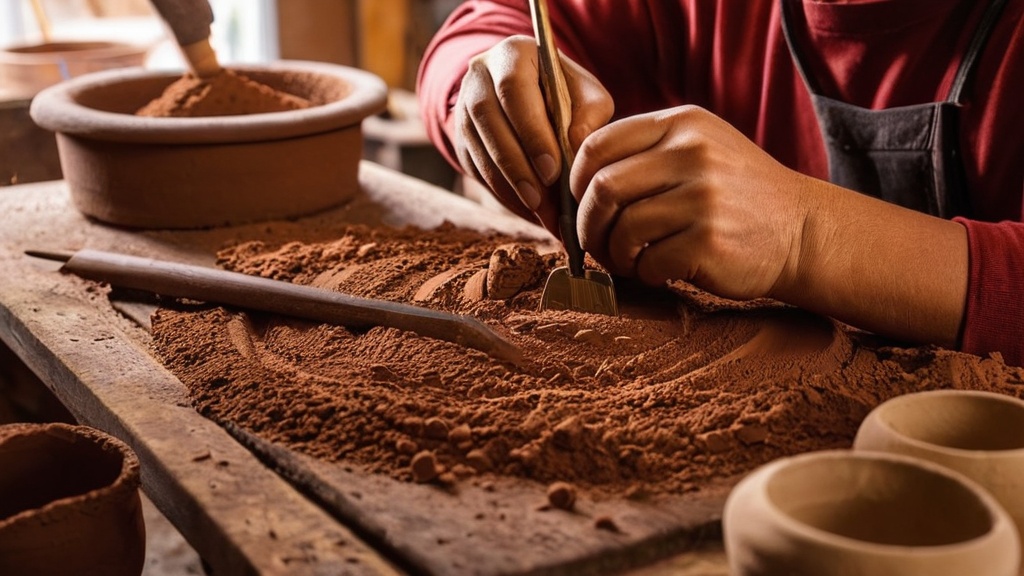
If your aspirations lean towards functional ceramics – think mugs, bowls, or decorative vases – then you’ll need to delve into the realm of traditional pottery clays. These are natural clays that require firing in a kiln at specific temperatures to achieve their final, durable form. The choice between different types of pottery clay significantly impacts the finished piece’s durability, water resistance, and aesthetic.
- ### The Enduring Legacy of Pottery Clays
Pottery clays are derived from natural earth deposits, composed primarily of clay minerals, feldspar, and silica. Their properties – plasticity, firing shrinkage, and fired strength – are determined by their geological origin and mineral composition. Unlike polymer or air-dry clays, these clays undergo a process of vitrification during firing, where the clay particles fuse together at high temperatures, creating a dense, glassy structure.
- ### Clays for Every Kiln and Every Creation
When you choose a pottery clay, you’re typically looking at two main categories, each suited for different applications and firing temperatures.
Stoneware: The Heavyweight Champion of Durability
For projects that demand robust durability and water resistance, stoneware clay is the undisputed champion. Stoneware fires at higher temperatures (typically between Cone 6 and Cone 10, which translate to roughly 1200-1300°C or 2200-2370°F) and develops a dense, non-porous body once fired. This makes it ideal for functional ware, such as dinnerware, serving dishes, and planters, as it can withstand repeated washing and exposure to moisture. Its strength also makes it suitable for larger sculptures that need to be structurally sound. If you’re aiming for pieces that are both beautiful and built to last, stoneware is your go-to choice.
Earthenware: The Gentle Giant for Decorative Delights
Earthenware clay fires at lower temperatures (typically between Cone 06 and Cone 2, which translate to roughly 950-1180°C or 1750-2150°F) and remains somewhat porous even after firing. While it’s not as durable or water-resistant as stoneware, its lower firing temperature makes it more accessible for those with less powerful kilns or for certain crafting endeavors. Earthenware is often favored for decorative items, tiles, and pieces where water resistance is not paramount. Its softer firing range also allows for a more forgiving glaze application in some instances, and it’s a classic choice for many traditional pottery styles. If you’re creating decorative pieces that won’t be used for serving food or holding water, earthenware provides a cost-effective and aesthetically pleasing option.
The Decision-Making Compass: Project Type, Finish, and Curing
When you stand before the array of clays, don’t let yourself get lost in the technical jargon. Instead, let your project guide you. The type of thing you want to create is the most significant factor in determining the best clay for the job. This, in turn, will influence the desired finish and the most appropriate curing method.
- ### Your Project Dictates Your Clay Choice
Consider the end goal of your crafting adventure. Are you dreaming of delicate earrings that catch the light? Or perhaps a robust coffee mug that can withstand daily use? The answer to these questions will narrow down your options considerably.
Jewelry: Where Detail Meets Durability
For jewelry makers, polymer clay is almost always the reigning champion. Its ability to hold incredibly fine details is essential for creating intricate beads, charms, and pendants. Furthermore, polymer clay’s durability after baking means your creations can withstand the wear and tear of daily life. Brands like Sculpey Premo, Super Sculpey, and Fimo Professional are particularly favored for their ability to capture extremely precise designs and their superior strength, ensuring your jewelry pieces are not only beautiful but also long-lasting.
Figurines and Miniatures: Precision and Character
Sculpting figurines, whether they are whimsical characters, realistic animals, or detailed miniature scenes, demands a clay that can hold its shape and allow for meticulous detail. Again, polymer clay excels here. For beginners, Sculpey III offers ease of use, allowing you to get comfortable with shaping and detailing. As you advance, Super Sculpey and Sculpey Premo become invaluable for their ability to capture the finest textures, sharp edges, and subtle nuances that bring figurines to life. The ability to bake them to a hard, permanent state ensures your creations retain their integrity.
Kids’ Crafts: Safety, Simplicity, and Fun
When crafting with children, the watchwords are safety, simplicity, and fun. Air-dry clay is an excellent choice for kids’ projects. Its non-toxic nature, ease of use, and the absence of any need for oven baking make it a perfect medium for little hands. The latest development, foam air-dry clay, is particularly noteworthy. Its lightweight, pliable, and forgiving nature makes it incredibly easy for children to mold and shape, while also minimizing the mess and potential for breakage. It allows them to focus on the joy of creation without the frustration of difficult materials.
Pottery and Functional Pieces: Strength and Serviceability
If your creative ambitions lie in producing functional pottery – items meant to be used and enjoyed in the kitchen or around the home – then you’ll be looking at traditional pottery clays. For pieces that require exceptional durability and water resistance, such as dinnerware or planters, stoneware is the top recommendation. Its ability to fire to a dense, non-porous state ensures it can withstand regular use and washing. For purely decorative pottery or projects that don’t require such robust properties, earthenware offers a good alternative, especially if you prefer a lower firing temperature.
- ### The Finish Line: Achieving Your Desired Aesthetic
Beyond the basic clay type, consider the surface finish you want to achieve. This can range from a smooth, polished look to a textured, rustic feel, or even a naturally matte appearance. The clay itself, combined with your finishing techniques (such as sanding, painting, or glazing), will determine the final aesthetic.
- Smooth and Glossy: Many polymer clays, when sanded and polished after baking, can achieve a remarkable glossy finish, perfect for jewelry and high-detail items.
- Matte and Natural: Earthenware and some air-dry clays naturally lend themselves to a more matte, earthy finish, especially when painted with matte acrylics or left unglazed.
- Textured: Different clay types will accept textures differently. Polymer clays can be imprinted with various tools, while air-dry and pottery clays can be manipulated to create subtle or prominent textures during the sculpting process.
- ### The Curing Method: From Oven to Air
The curing method is inextricably linked to the type of clay you choose. It’s the process that transforms your soft, pliable creation into a permanent, durable object.
- Baking: This is the hallmark of polymer clay. It requires a standard home oven set to the temperature specified by the manufacturer. Proper curing is essential for achieving maximum strength and durability.
- Air-Drying: The straightforward method for air-dry clays. Simply allow your creations to dry completely in the open air. This can take 24-72 hours or more, depending on the size and thickness of the piece and the humidity levels.
- Kiln Firing: This is exclusive to pottery clays (stoneware and earthenware). It involves firing the clay in a specialized kiln at very high temperatures to achieve permanent hardening and vitrification.
Texture and Flexibility: How the Clay Feels in Your Hands
The tactile experience of working with clay is a significant part of the crafting process. The texture and flexibility of a clay will influence how easy it is to manipulate, how well it blends, and the types of techniques you can employ.
- ### Feeling the Difference: Understanding Clay Textures
Clays vary significantly in their initial stiffness and how they feel as you work them.
- Soft and Pliable: Clays like Sculpey III and foam air-dry clay are very soft and easy to knead. They require minimal effort to become workable, making them ideal for beginners or those who prefer a very yielding material.
- Firm and Responsive: Sculpey Premo, Super Sculpey, and Fimo Professional are firmer. They require more conditioning (kneading) to become pliable but offer greater control and the ability to hold sharper details.
- Earthy and Grainy: Traditional pottery clays like stoneware and earthenware often have a more natural, sometimes slightly grainy texture, reflecting their mineral composition. Their consistency can range from very soft and workable to quite stiff, depending on the specific formulation.
- ### Flexibility Matters: From Delicate to Robust
The flexibility of a clay, both before and after curing, is crucial for certain projects.
- Pre-Cure Flexibility: Polymer clays offer excellent flexibility while still soft, allowing you to bend and shape them without immediate cracking. This is beneficial for creating dynamic forms.
- Post-Cure Flexibility: While most polymer clays become quite rigid after baking, some formulations offer a degree of flexibility which is advantageous for jewelry that needs to bend slightly without breaking.
- Brittle Potential: Air-dry clays, once fully dried, can be somewhat brittle. They are best suited for decorative items that won’t be subjected to significant stress.
- Rigidity of Fired Clay: Once fired, stoneware and earthenware become very rigid and strong, providing the structural integrity needed for functional pottery.
Budgeting for Your Creative Endeavors: The Cost of Clay
The cost of clay can vary quite a bit depending on the type, brand, and quantity you purchase. Understanding the general price ranges will help you plan your crafting budget effectively.
- ### What to Expect in Terms of Clay Prices
Generally, you can expect to find quality clay within a reasonable price range for most crafting projects.
- Entry-Level and Small Packs: Smaller packs of polymer clay or basic air-dry clays can often be found for under $10, making them very accessible for testing new brands or for smaller projects.
- Mid-Range and Standard Packs: Most standard-sized packs of reputable polymer clays like Sculpey III and Sculpey Premo, as well as good quality air-dry clays, will typically fall in the $10–$20 range.
- Premium and Specialty Clays: Higher-end polymer clays such as Super Sculpey and Fimo Professional, as well as larger quantities of pottery clay, may range from $15 to $30 or more, depending on the size of the package and the specific brand.
- Pottery Clay: While you can find smaller test batches of pottery clay for a reasonable price, larger bags (e.g., 25 lbs) will naturally cost more, often in the $30-$60+ range, but they offer significant value for serious pottery work.
Remember that while quality clay is an investment, it often pays for itself in terms of improved results and a more enjoyable crafting experience. Don’t shy away from buying a slightly more expensive brand if it’s specifically recommended for the type of detailed work you want to achieve.
Your Creative Canvas Awaits!
Choosing the best clay for your crafting projects is an exciting part of the creative process itself. By understanding the distinct characteristics of polymer clay, air-dry clay, and pottery clays, and by considering the specific demands of your intended project, you can confidently select the medium that will bring your artistic visions to life. Remember to prioritize project type, desired finish, and curing method. Don’t be afraid to experiment with different brands and types as your skills grow and your creative aspirations evolve. The world of clay is rich with possibility, and with the right material in your hands, your crafting journey is sure to be a rewarding and fulfilling adventure. Now, go forth and create!
FAQs
What is the best type of clay for crafting projects?
The best type of clay for crafting projects is polymer clay. It is versatile, easy to work with, and comes in a wide range of colors.
What are the advantages of using polymer clay for crafting?
Polymer clay is popular for crafting because it is durable, can be baked to harden, and can be easily molded and shaped into intricate designs.
Are there different brands of polymer clay to choose from?
Yes, there are several brands of polymer clay available, each with its own unique characteristics and color options. Some popular brands include Sculpey, Fimo, and Cernit.
Can polymer clay be used for both small and large crafting projects?
Yes, polymer clay can be used for both small and large crafting projects. It is suitable for making jewelry, figurines, and even larger sculptures.
What are some tips for working with polymer clay for crafting projects?
Some tips for working with polymer clay include conditioning the clay before use, using specialized tools for shaping and detailing, and following the baking instructions for the specific brand of clay being used.